Stay informed with the LNN Daily Newsletter
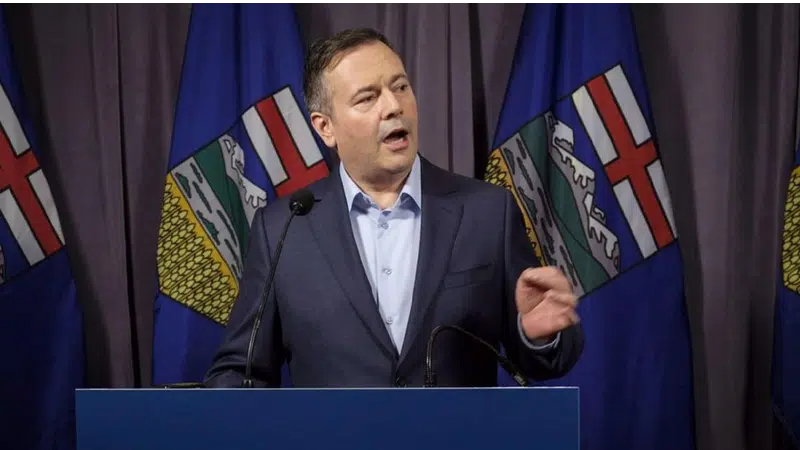
Alberta Premier Jason Kenney (Photo: The Canadian Press)

Jason Kenney spreads message of hope during global pandemic

Mar 19, 2020 | 12:07 PM

EDMONTON, AB – The provincial government is offering financial support to those impacted by the global COVID-19 pandemic.

Alberta Premier Jason Kenney said the province will offer $573 cash payments per week to people who are in isolation for two weeks with no pay or other benefits.

“You figure you gotta go and make $100 today to pay the rent, we don’t want you to worry about that. This basically 600-dollar payment should give those people a bit of financial security,” said the Premier.

A utility payment holiday was also announced, so residents can defer utility (gas and electricity) bill payments, regardless of service provider, for the next 90 days. Kenney said this is to ensure no one is cut off from these essential services during the current health and financial crisis.


“The bottom line is this, we have asked and they have agreed that they will not cut off service if people do not pay their utility bills over the next 90 days, so there’s no need for an application and I believe the utility companies will be communicating directly with their customers on that and then we will review where we’re at after 90 days,” he said.

Kenney noted that it’s up to municipalities to decide if they’ll meet similar regulations for water services.

The government is also implementing a six-month, interest free moratorium on Alberta student loan payments. Personal banking customers can apply for a deferral on their ATB loans, lines of credit and mortgages for up to six months.

“There is relief. There is immediate relief on their [Albertans] utility bills, immediate relief on their mortgage payments, for students, immediate relief on their student loans,” Kenney said, adding his government will do everything they can to protect Albertans.

SENSE OF HOPE

Kenney said it’s his duty as Premier to offer a sense of hope for Albertans, but it’s also his obligation to be realistic and honest.

“I believe there are reasons for hope, strong reasons for hope that we’ll come out of this stronger than ever, but this is going to take some time and I think Albertans need to start to wrap their heads around that,” he stated.

“Our scientists project that the viral infection in Alberta will peak about four to five weeks from now. That means it will hopefully start to decline in its intensity after that, but still pose a very real threat to public health well into May and then into June.”

He said many of the social distancing measures undertaken by the province will probably remain in effect through the end of May, but as the COVID-19 situation evolves day-by-day, he couldn’t say for sure how long some of these measures will stay in place.

“Let’s hope we reach the peak earlier and it affects fewer people than we are projecting, but to be realistic, based on this velocity of this disease around the world, we can expect this to pose a very real threat to public safety for at least the next two or three months and then beyond that…unless until a vaccine is developed, it will continue to pose a global threat, and most projections I see are for a vaccine potentially be available to people in 2021,” he said.

Kenney said although the global economy could start to recover from the impacts of the pandemic in the summertime, Alberta’s finances could be hit longer if the oil price war between Russia and Saudi Arabia continues, keeping the price of Canadian oil low.

“We’re in tough probably for the balance of 2020. We’ll get through it but it’s not going to be in a couple of weeks,” he commented.

HEALTH EQUIPMENT

Kenney said as far as he knows, the province does have enough health equipment for Alberta Health Services to deal with the growth of COVID-19 cases.

“Their [Alberta Health Services] primary concern is around access to appropriately trained medical personnel to actually operate that equipment, which is one of the reasons why we declared a Public Health Emergency [Tuesday] to ensure that AHS managers have the tools to ensure that people are available when they need it,” he said.

“In terms of ventilators, I think we have the highest number of ventilators per capita in the country – or we’re the second highest perhaps and quite wisely, AHS ordered an additional 50 ventilators when they got the first news of the coronavirus outbreak in China back in January, so those ventilators are on the way as a kind of supplementary equipment.”

In response to the federal government’s $82 billion COVID-19 response package, Kenney said it’s a “very good first measure”.