Stay informed with the LNN Daily Newsletter
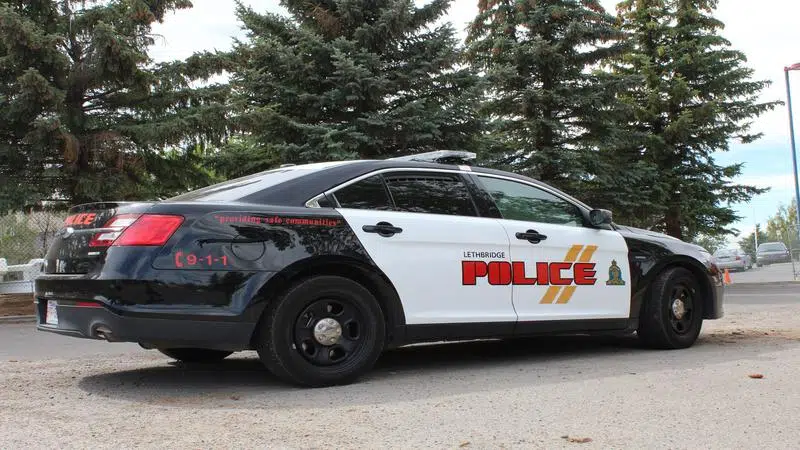
A Lethbridge Police vehicle (Photo: Lethbridge News Now)

Latest stats show Lethbridge Police resolved 99% of 2019 calls without use of force

Mar 25, 2020 | 11:44 AM

LETHBRIDGE, AB – Lethbridge Police took close to 36,000 calls for service in 2019.

99 percent of those calls were resolved without officers using force. Those numbers are from the 2019 Use of Force Statistics Report and were tweeted out by Acting Police Chief Scott Woods.

Tweet posted by Acting Police Chief Scott Woods (@LPSChief1)

Lethbridge News Now spoke with Staff Sergeant of LPS’ Support Services Division Christy Woods about the numbers. Woods said the stats speak very highly of the police force and their training methods.


“We’re very dedicated in our training unit to [being a] very practical-based training, very motivated and very proactive as far as trying to come up with valid instruction that’s relevant to what our officers are facing and very fluid and dynamic depending on what’s changing with our statistics every year and what our officers are facing,” she added.

Woods explained they have added an extra de-escalation module to their training program with the goal being to provide officers with tools to de-escalate situations verbally and eliminating the use of force.

She said that the Lethbridge Police Service has a strong track record of not using force when interacting with individuals in the community.

“I can’t remember a time in the last five to 10 years where we have ever been more than one percent [use of force], it’s always less than one percent,” she said.

“I think there’s a misperception of police in general of what we do on a day-to-day basis and just the context of how often our officers are there talking to people instead of using force.”

UNDER THE INFLUENCE

In his tweet, Scott Woods noted that, of the individuals that officers were required to use force on, almost half were under the influence of drugs or alcohol.

Staff Sergeant Christy Woods said the numbers regarding intoxicated individuals are based on an officer’s perception of the situation.

“So, that could be based on prior knowledge with the subject if they know they have a mental health diagnosis or if they can readily identify symptoms that they’re affected by alcohol or drug intoxication,” she said.

“It’s all based on the officer’s perception. We have to keep that in context but in general last year, only about four percent of the people we [dealt] with would be perceived as behaving normally and this year is two percent.”

She said when someone is acting “normally” and officers can talk with them directly, that would less likely result in the need to use force.

“The fact that we only did use force in one percent of the time, and actually, we have a really low deployment numbers for the times that we actually draw or point a taser at somebody, a CEW (conducted electrical weapon) at somebody…the actual deployments we use are actually quite, quite low, and it speaks well to the tactics and training of the officers, the patience [and] the ability to use verbal de-escalation and gain someone’s compliance without having to use force,” she added.

VIRTUAL REALITY

Woods explained that the LPS has been using a simulator in their training for a number of years.

“It’s actually interactive with our tools and weapons and we’re currently working with Lethbridge College on a joint project,” she said.

READ MORE: Police agencies must lean on technology & younger officers going forward

“They actually have funding and they’re looking at doing a couple of projects with us that would be police specific.”

She remarked that the low use of force rate is something the LPS can be very proud of. Woods said the Use of Force Statistics Report will be going to the Lethbridge Police Commission for review.