Stay informed with the LNN Daily Newsletter
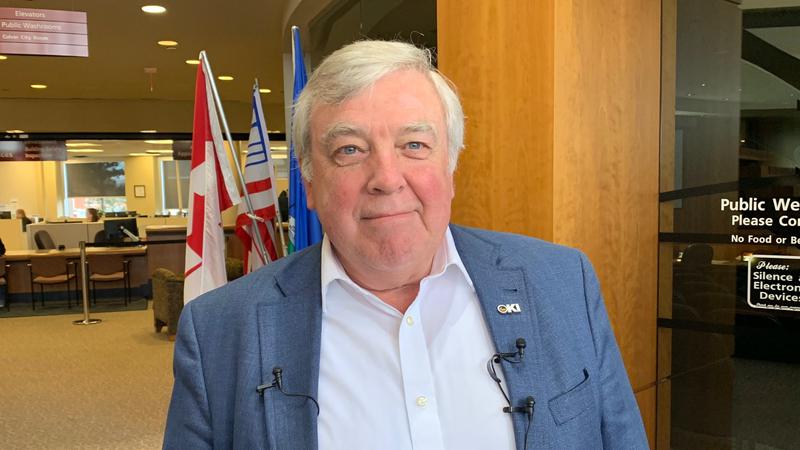
File photo of Lethbridge mayor Chris Spearman (Lethbridge News Now)

Budget 2021 reaction: Lethbridge mayor Chris Spearman & the AUMA

Feb 26, 2021 | 11:42 AM

LETHBRIDGE, AB – Reaction continues to pour in on the Government of Alberta’s 2021 Budget, which was unveiled on Thursday.

READ MORE: 2021 Alberta budget revealed with “record” health spending, no new taxes

In the budget address, Finance Minister Travis Toews noted that the provincial deficit for the 2021-2022 fiscal year is projected at $18 billion. Last year, it was forecast at $21 billion.

CHRIS SPEARMAN – MAYOR OF LETHBRIDGE

Lethbridge mayor Chris Spearman said the good news stemming from the 2021 budget is that there are “minimal impacts” to municipalities. However, he noted that council is concerned about future reductions in the Municipal Sustainability Initiative (MSI).

“There are no significant cuts to immediate municipal funding and no impacts or reductions on municipal revenues. The education tax component of the municipal budget has been kept the same, so we see no impact on local taxes,” Spearman said Friday morning.

“We see no impact on our operating budget in the short-term, so the budget that we passed that has zero overall increase in terms of the revenue requirement, we don’t see that being impacted by this budget.”

He said it appears that the “bad news” has been postponed to a later date, noting there are of course concerns regarding the provincial deficit, but the goal of the budget is to get the economy back on its feet.

“Generally, the main items for taxpayers and for city residents is there should be no impact on our planned zero-overall property tax increase,” stated Spearman.

“We are interested in continuing to invest in our city and we’ll see what opportunities there are in terms of new construction that might come out of this budget, so there may be some news for school boards and others on construction projects and none of our projects that were previously announced have been affected.”

He said this means the city will move ahead with its continued investments at the Lethbridge Airport, in broadband infrastructure, and in downtown improvements to provide employment to residents.

“One area that we have some concerns about, of course, are our social issues and addressing those,” he said.

Spearman cited the $11.1 million investment for a supportive housing project in Lethbridge.

“We’d like to see that project move ahead and again, create jobs in the local economy. So, we will be looking for more details on that as we move forward,” he said.

“This budget is focused on economic recovery post-COVID. The big takeaway for Lethbridge is that the Municipal Sustainability Initiative will be the same this year and reductions will follow in subsequent years. The Federal Gas Tax is forecast to continue and that will pass through – that should give us opportunity for perhaps some additional project considerations as we go forward and look at our capital budget in May.”

He added that the city hopes that funding allocated to mental health will be able to assist with the social issues Lethbridge is facing.

AUMA RESPONSE

The Alberta Urban Municipalities Association (AUMA) says the “broken promises and choices” made in Budget 2021, as well as the corresponding three-year fiscal plan will have long-term impacts on Albertans.

In a statement, the AUMA noted that although increases to the Municipal Sustainability Initiative (MSI) funding were included in the budget, the “long-awaited” Local Government Fiscal Framework (LGFF) is being deferred until 2024.

“Municipalities will see a 25 per cent cut in MSI funding collectively over the next three years,” read the statement.

“Over the long term, municipalities require stable and predictable funding to ensure economic growth and recovery,” said AUMA President Barry Morishita.

“The changes to MSI and the LGFF are another example of the province changing its plan and going back on campaign promises, which forces municipal leaders to go back to the drawing board for how they will take care of their community infrastructure.”

AUMA says it will continue to advocate for the importance of the LGFF.

On the education property tax front, AUMA noted that it’s relieved the province did not follow through with its planned increase to education property taxes. However, the organization noted the government still takes over $0.30 of every dollar that residents and businesses pay in municipal property taxes.

“This leaves a gap in expectations for citizens, who assume their municipal taxes will be used to pay for local services and infrastructure. The education property tax requirement also impacts local economic development, as a significant portion of citizens’ taxes leave their communities,” said Morishita.

The association noted that the budget does not address “several immediate crises Albertans are grappling with”.

“An immediate response is required to provide urban municipalities with funding to address homelessness and support struggling businesses,” read the statement.

“We are also dismayed to see that while it sets aside funding for recovery and treatment, the budget does not address the immediate death toll resulting from the opioid crisis.”

AUMA says looking forward, it will continue to advocate for collaborative partnerships with municipalities to ensure that smart investment occurs in the province, where there can be a return on investments, creation of jobs and stimulation of the economy.