Stay informed with the LNN Daily Newsletter
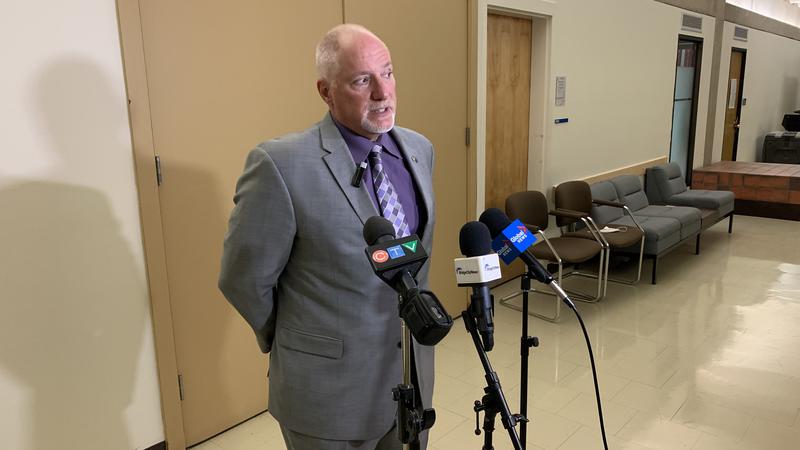
Presenter Tony Pustizzi. (Lethbridge News Now)

Officials share lessons learned from Parkland school shooting with Lethbridge audience

Dec 7, 2021 | 3:44 PM

LETHBRIDGE, AB – ***Warning: This article contains graphic details ***

It was the fourth-deadliest school shooting ever.

The officials who responded to the Parkland school shooting wanted to ensure that people here are prepared in case anything like that happened in Lethbridge.

Tony Pustizzi and Frank Babinec spoke at a conference at the University of Lethbridge on Wednesday, with hundreds of police officers, firefighters, paramedics, school officials, and more in attendance.


At the time of the mass shooting at Marjorie Stoneman Douglas High School in Parkland, Florida on February 14, 2018, Pustizzi was the Chief of the Coral Springs Police Department. Babinec was the City of Coral Springs’ Fire Chief.

“I have one goal here today,” says Babinec, “and that is somebody in that room walks out with something, at least one thing, that is going to allow them to better prepare themselves, their organization, or their community should a large-scale event take place in their communities.”

The shooting resulted in 17 people being killed and another 17 seriously injured.

They described Parkland as being a place where you would not expect there to be a mass-casualty event – a young, family-oriented community with higher-than-average incomes and housing prices, and one of the lowest crime rates in the country.

That, however, is one of the major takeaways, that a tragic event like this could happen anywhere.

Thanks to a combination of school security cameras, 9-1-1 phone calls, and radio communications between officers, Pustizzi and Babinec were able to show those in attendance a 15-minute recreation of the entire mass shooting in real-time.

We were shown a video that the shooter took of himself beforehand, which had never been publicly released, talking about his motivations and how he was excited to become America’s “next school shooter.”

The perpetrator, who we have been asked to not name as “they don’t deserve the recognition,” entered the school property at 2:20 pm.

All of the bullets that hit the victims were fired within a four-minute period. The first backup did not arrive on scene until three minutes in.

Seven minutes after arriving at the school, the shooter fled and was off of school property.

Pustizzi says it is absolutely crucial for police to have strong, positive relationships with all of their stakeholders.

“We had an us-versus-them relationship with our county school system. We didn’t get along – it was police verse school and it was a very negative thing. When something like this happens and you don’t have those connections, it’s tough because everyone starts to blame game and why this and how come you didn’t do this. It would’ve been nice to have that settled beforehand.”

There were also conflicting interests and jurisdictional issues between the city police and county sheriffs that, on occasion, would result in less-than-optimal response times.

The pair stated that active killer training scenarios need to be done on a regular basis as first responders would not have time to review the details of their training when an incident like this happens. The local school resource officer has been heavily criticized in the wake of the shooting as Pustizzi and Babinec said he clearly could have done more.

Another thing Pustizzi wanted to stress is the need for reinforced glass in the doors to classrooms.

The shooter knew he would have to stay on the move and never once entered a classroom. If he looked through the window and saw people inside, he would break the glass and shoot anyone he could see.

Being located near the Florida Everglades, all schools in that area use stronger hurricane-graded materials, which Pustizzi says likely prevented even more people from dying and getting injured.

Constable Matt Schoenroth, a training officer with Lethbridge Police Service, says he found the entire presentation to be incredibly informative.

“Some of the takeaways are the totality of the circumstances. Some of the things he talked about are threat cues leading to the event, he talks about how there were several safety mechanisms in place that either got missed or forgotten or they weren’t trained properly. Also talking about police response and how we need to make sure we’re up to date on what’s the most current best practice for when an event like this happens.”

Going forward, Schoenroth hopes to see even more collaborative training with Lethbridge Fire and Emergency Services. That sentiment was echoed by EMS Deputy Chief Gerrit Simke.