Stay informed with the LNN Daily Newsletter
(File photo from rdnewsNOW)

Associate Minister issues statement on Alberta’s opioid crisis as records break

Dec 24, 2021 | 6:59 AM

2021 is officially a record year for opioid-related deaths in the province, with new numbers available on the Alberta Substance Use Surveillance System showing 1,247 in Alberta through October.

There were 1,165 across the province in all of 2020.

In October alone, there were 148, the highest one-month total on record, topping the previous record set in September when there were 146.

Associate Minister of Mental Health and Addictions Mike Ellis issued a statement this week regarding the province’s current addiction crisis, saying that said crisis has been exacerbated by the COVID-19 pandemic and related restrictions.


“Since the onset of the COVID-19 pandemic, opioid-related fatalities have increased across the country, with public health restrictions having a negative impact on people with addiction,” Ellis says.

“Data now shows that the fourth wave in September and October has only further fuelled opioid-related fatalities. The Office of the Chief Medical Examiner reported 146 opioid-related fatalities in September and 148 in October. This trend is being seen in other jurisdictions, including British Columbia where 201 suspected overdose deaths were recorded in October alone. My heart goes out to the families who have lost loved ones as a result of the illness of addiction, whether it be from opioids or any other substance. It is evident that addiction affects everyone in our communities.

Red Deer, meantime, has experienced 34 deaths from opioids in 2021 through October. In August, September and October, the three new months being reported, there were nine, including six in October alone. Red Deer had 49 in all of 2020.

“There is hope for those who struggle with this brutal illness. We know that recovery from addiction is possible and that when people have access to the appropriate treatment, recovery can be expected. Alberta is building a comprehensive recovery-oriented system of care that supports every Albertan in their pursuit of recovery. The system we are building ranges from prevention and intervention to treatment and recovery,” Ellis continues.

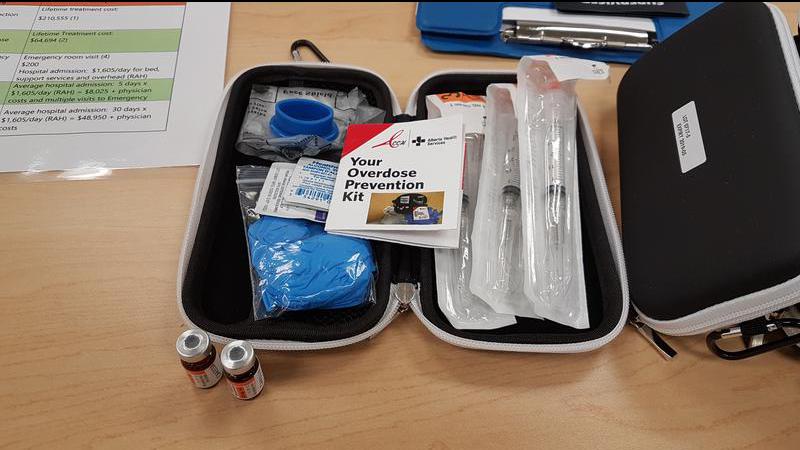
“Alberta’s government has been doing everything it can to increase access to care by funding more than 8,000 annual treatment spaces, removing user fees for publicly funded addiction treatment, supporting medication-based treatment on demand and so much more. Our approach also includes providing access to services that reduce harm such as overdose prevention services, increased access to naloxone and the rollout of the Digital Overdose Response System. There is no one solution to the illness of addiction, and we need the help of police, fire, EMS and civil society to tackle this crisis and help people get the care they need.

In Q3 (July-Sept.), across Alberta, 51 per cent of all unintentional opioid poisoning deaths took place in somebody’s private residence, while 28 per cent occurred in public.

In Red Deer, 50 per cent took place in someone’s private home, 25 per cent were in public, and 25 per cent were in an “other facility” which is defined as private residence, shelter, addictions facility, correctional facility, or health care centre.

“With the onset of the Omicron variant of COVID-19, it is uncertain whether the pandemic impacts will carry into the New Year. With current world events, we expect it could get worse before it gets better. We will do everything we can to ensure Albertans continue to be able to access a comprehensive system that meets people where they are at and helps them get where they need to go,” Ellis concludes.

“With the holiday season upon us, I would like to remind everyone that support continues to be available. Anyone struggling with opioid addiction can call the Virtual Opioid Dependency Program at 1-844-383-7688 to get treatment the same day with no wait-list. Albertans can also call 211 any time, day or night, to get connected with addiction and mental health supports in their area.”

Red Deer’s Overdose Prevention Site saw 280 unique visitors in Q3, up from 243 in Q2 and 202 in Q1. Q3 2020 saw 213, and Q4 2020 had 227.

Total visits to the Red Deer OPS in Q3 numbered 10,397, up from 7,253 in Q2, 7,697 in Q1, 8,221 in Q4 2020 and 8,705 in Q3 2020.