Stay informed with the LNN Daily Newsletter
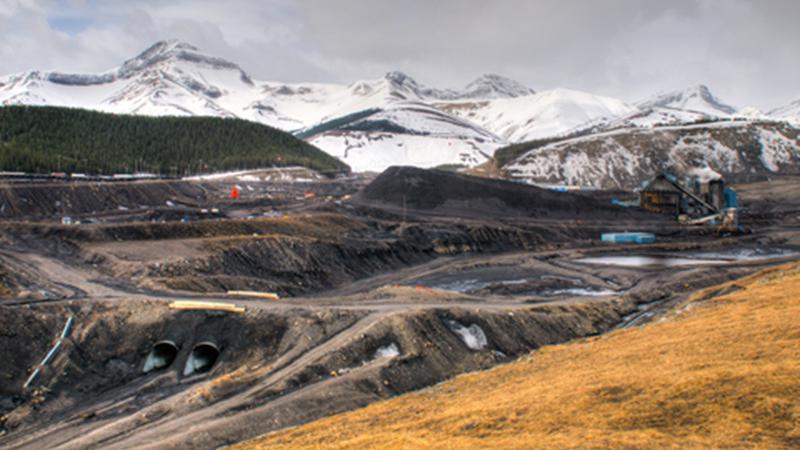
ID 31578797 © Brandon Smith | Dreamstime.com
June 11, 5:30-7:30pm

Coal town hall in Fort McLeod

Jun 11, 2025 | 3:30 PM

The Water For Food group has a number of questions it would like to see answered by the provincial government regarding selenium and other coal mining pollutants, at the Coal Town Hall meeting taking place in Fort McLeod Wednesday evening.

The town hall is being hosted by Premier Danielle Smith, Energy Minister Brian Jean, Environment Minister Rebecca Schulz, Agriculture Minister RJ Sigurdson and MLA Chelsae Petrovic.

The Water For Food group claims it has written several times to Premier Smith, Energy Minister Brian Jean and Environment Minister Rebecca Schulz and have yet to receive answers to their questions.

“We hope that the format for the coal Town Hall Meeting will allow for unlimited questions with fulsome honest answers from Premier Smith and her Ministers,” reads a statement from Water For Food spokesperson, Chris Spearman.


“Many Alberta families have operated farms and ranches in southwest Alberta for many generations. They have continued to invest and an industry of internationally known food processors have done the same,” he exclaims. “Our Agrifood economy depends on water availability that is not contaminated by excess selenium and other coal mining pollutants.”

Spearman says they are not assured by what they call a lack of environmental compliance and vague assurances from coal mining companies that new technologies and practices will ensure that the harm documented in Alberta government scientific reports will no longer occur.

The Water For Food group has a list of 20 questions they would like to see answered:

1. In the Coal Policy announcement on December 20, 2024, Environment Minister Rebecca Schulz referred the governments science reports on coal mining. When we read the government’s studies we discovered that they validated our concerns about the impact of coal mining.

Question : Why is the Alberta government proceeding with coal mining when their own studies demonstrate that coal mines, pollute river systems, emit excessive selenium, generate wind blown coal dust and continue to pollute for decades after the mines cease operating.

Question : Why is the Alberta government proceeding with coal mining when its own science studies have confirmed the environmental damage that will occur?

2. Alberta government research studies confirm that wind blown coal dust from the Elk Valley has contaminated snowpack in Alberta and Window Mountain Lake. The Chinook winds in Southern Alberta create an even greater challenge. What information does the Alberta government on the magnitude of wind blown coal dust from Grassy Mountain and the impacts it will have on Alberta lakes, rivers and streams, soil and air quality?

3. The non-binding plebiscite conducted the Crowsnest Pass included only residents of that municipality and did not include other Albertans who could be negatively impacted by the Grassy Mountain coal project.

Less than 2,000 people voted in favour of Grassy Mountain in the non-binding plebiscite conducted the Crowsnest Pass. We sponsored an official petition that was tabled in the Alberta Legislature that generated more than 6,000 signatures in just a few weeks.

Question : Why were Albertans who live down wind and down stream from the Grassy Mountain coal project not consulted and included?

4. Economic Development case : Investment in Agrifood vs. Coal mine

How does the Alberta government justify the substantial risk to the well developed and long established agrifood economy of Southwest Alberta that employs thousands 0f residents for a coal mine that will generate a few hundred jobs for up to twenty-five years?

5.What type of mine is Grassy Mountain?

Energy Minister Brian Jean says it will be an open pit mine at the coal policy announcement on December 20, 2024. On her weekly radio show, Premier Danielle Smith has said open pit mines will not be permitted. She has twice stated that Grassy Mountain will be an underground tunnel mine.

6. What will be the back up source for potable water for 150,000 people when excess selenium is identified, rendering the Oldman River unusable?

To our knowledge, the technology does not exist to remove excess selenium from river water to create potable water. please give an example anywhere in the world where a municipality has been able to do this successfully.

7. Do we have sufficient water to support Grassy Mountain and the other proposed coal projects?

Water scarcity in Southern Alberta is an issue each and every year.

8. Albertans highly value clean air, clean water, wildlife and the scenic beauty of our Eastern Slopes. Do you really think allowing coal mining in our Eastern Slopes is worth the well-documented risks to water (quality and supply), air quality, fish and wildlife and mountain scenery? If your answer is ‘yes’, benefits of coal mining outweigh the risks, what is your justification?

9. Explain what information you have to support coal mining in the Eastern Slopes that was not available to Peter Lougheed’s government when developing the 1976 Coal policy and more recently a joint federal/provincial panel of experts considering the proposed Grassy Mountain mine who concluded mountain coal mining is not in the public interest.

10. Where are the scientists, the experts, who actually know what they’re talking about and who we trust, instead of a bunch of deceptive, uninformed, and flip-flopping politicians who are not operating in the broad public interest?

11. Why are we proceeding with coal mining when foreign owned coal companies don’t respect Alberta regulations and and requirements?

12. When will Alberta Energy Regulator enforce existing regulations, shutting down non-compliant mine operators and levying substantial finest demonstrate the Alberta government is serious about compliance?

13. Why is the Alberta government consulting exclusively with foreign owned coal companies to develop the new Alberta Coal policy?

The coal companies clearly have a conflict of interest. Any new coal policy development process should have the involvement and approval of Albertans.

14. Is there a clear understanding of the interaction between the subterranean aquifers in order to know what mining disturbance to them could incur, with the potential of harmful contaminants being introduced to them, and if so, where is the documentation to support mining would be safe with regard to that?

15. There is evidence from multiple sources that Northback far exceeded the limits on campaign spending for the non-binding referendum. They have submitted the cost of signs as their only spending while excluding the cost of local newspaper advertising, campaign consultants, meals and bar tabs at local restaurants and bars.

If true, Northback can not be trusted and the non-binding vote should be invalidated.

16. When the Alberta government of Jason Kenny opened up the 1976 Coal Policy, Albertans strongly objected. Due strong opposition from Albertans, the Alberta government backed down.

There was a provincial election in 2023, the current UCP government never campaigned on opening up the mountains or the coal policy.

Why is this Alberta government proceeding without a mandate from Albertans?

17. The Australian coal companies are suing the Alberta government for changes on coal policy. Our Alberta government appears to be prepared to settle these lawsuits with taxpayer dollars or consent to coal mining that Albertans do not want.

Will the tax dollars of Albertans be used to settle court cases to foreign owned coal mining companies for coal mining policy changes that Albertans never endorsed or consented to?

18. After the joint federal provincial panel announced its decision in June 2021 rejecting the Grassy Mountain mine project, Northback appealed the decision three times and lost each time in court.

There are allegations that the foreign owned coal companies lobbied the government after the 2023 provincial election to allow coal mining despite opposition from Albertans.

What was the process that convinced this Alberta government to allow Grassy Mountain coal project to proceed, despite the joint panel decision and the subsequent court decisions?

19. Energy Minister Brian Jean acknowledged on December 20, 2024 that the new coal policy and royalty scheme would not apply to Grassy Mountain, ensuring that the economic benefits from the project to Albertans would be minimal.

Why is the Alberta Government proceeding with the project?

20. The metallurgical coal to be mined at Grassy Mountain and other sites by the Australian mining companies is not needed by the Canadian steel industry and is intended to be exported to Asian markets. The Canadian steel industry is concerned about steel dumping from these same Asian markets.

Why is the Alberta government supporting export of coal from Alberta to markets that harm the Canadian economy?

The Coal Town Hall is Wednesday, June 11, 2025, 5:30 to 7:30, doors open at 5:00 pm, at the Fort Macleod Community Hall.