Stay informed with the LNN Daily Newsletter
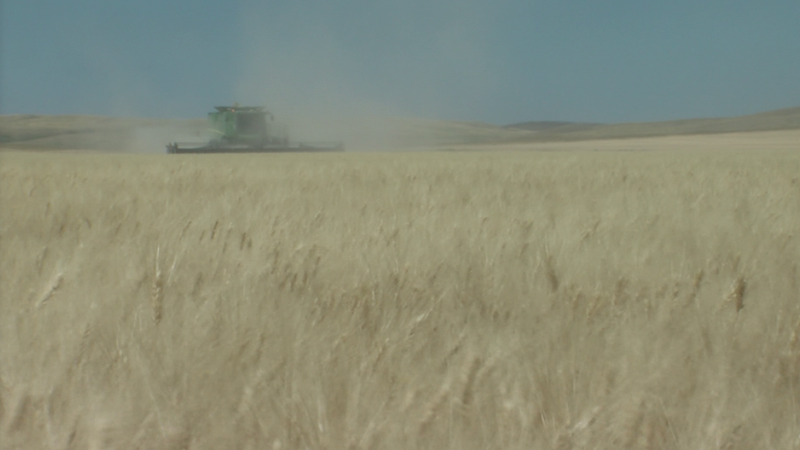
Harvest taking place at the Neubauer farm in 2024 near Irvine, Alta. (Photo: CHAT News Today)

South Alberta School of Agriculture looks to help students gain entry into the industry

Jul 17, 2025 | 2:58 PM

The South Alberta School of Agriculture (SASA), through the Prairie Rose Public Schools, plans to take agriculture education to the next level, giving students a pathway to enter the industry while they are still in high school with an ag-focused facility.

The hopes are to have the location open to students by September 2026.

Nichole Neubauer with Neubauer Farms is involved in the development of the academy programming through Prairie Rose, and currently runs the Irvine Agriculture Discovery Centre at Irvine School.

Some of Prairie Rose’s other schools also have greenhouses and farm programs within them that Neubauer helps facilitate.


The details are still being worked out for the location of the new facility, but Neubauer said the plan is to have it near Eagle Butte High School in Dunmore, with the need for the students to travel to the location.

“We’re hoping probably by the end of summer we’ll be able to make a bigger, more formalized announcement with the timeline and the path forward,” Neubauer said.

She adds that these students will be exposed to different facets of agriculture.

“Livestock production, agronomy, heavy-duty equipment maintenance, and operation, as well as a horticulture stream, which would lead to food studies and understanding of the opportunity to add value to products and we also plan to have a storefront,” Neubauer said.

“What it will do is give kids a really high-level overview of all the different pathways in industry and then as they go through their high school program, they’ll be able to narrow the scope to their chosen field of interest,” she added.

“We plan to also have dual credit opportunities with various partnerships with post-secondary institutions.”

Prairie Rose and Neubauer have been working closely in collaboration with Medicine Hat College to help develop post-secondary pathways.

Neubauer said they need to inspire youth to the many exciting possibilities in agriculture.

“I think what exists in ag is a bit of an unknown entity, in that there are great jobs in science and technology, becoming very much a technologically driven field,” Neubauer said.

“Some folks that are not living in the industry, not working in the industry may not understand there is lots of exciting growth potential. We are a food-producing nation, and we are very good at growing food for other people in the world here in southeast Alberta,” she added.

“We have beautiful, warm, sunny summers of irrigation, and we have lots of really great producers, and there is a lot of need in the workforce.”

Neubauer said research done by the Royal Bank of Canada indicates that by 2030, Canada will need over 123,000 people to join the agriculture and agri-food industry.

She adds that Verge Economic Development did a research study about workforce development in agriculture last year and found that 37 per cent of farmers and producers in the region are set to retire within the next 10 years.

The study also found that those respondents indicated they are short workers by 46 per cent.

“That isn’t just frontline labor jobs. Those are great jobs working in sales, retail, and also working within the operations of these big farms,” Neubauer said.

“Farming is big business and I think sometimes that’s forgotten. The large operators will have people managing everything from equipment maintenance schedules to marketing decisions to human resources and accounting,” she added.

“Having a skilled workforce to help sustain and grow farms in our region is very important, and that’s really the premise of developing this program.”

Neubauer said that agriculture can be a tricky industry to get into.

“If you are not born and raised on a farm, there might be some barriers to accessing the industry and lots of students haven’t developed that intrinsic motivation or that love for agriculture if they don’t have exposure,” Neubauer said.

“This program is going to provide those opportunities for not only our rural students, but for students that are from more urban-based settings,” she added.

“You definitely don’t have to own land and have a multi-generational family farm to work in agriculture.”

Neubauer said there is also a variety of great ag industry jobs in machinery, technology, design, development, research, communication, marketing and public relations.

“Our aim is to really open those gates of opportunity for students even if they just have a bit of an interest in agriculture,” Neubauer said.

“The great part about the program is because it’s offered in high school, students will be able to earn credit towards high school graduation for their participation in the coursework that will take place at the SASA site.”

Prairie Rose announced last month that they received $750,000 in funding from the Alberta Government to expand collegiate programming earmarked for the development of the SASA campus.

Consultation has also taken place with Cypress County for the program to seek a repayable loan to build some of the campus infrastructure; however, nothing has been formalized yet.

“We’ve been in talks with the county and we are really grateful for the fact that they’re very supportive of this project, they see the benefit and how improving access to workforce can lead to improved economic development,” Neubauer said.

With various stages of development for SASA, it is expected to facilitate up to 60 students enrolled in the program.

The total value to complete the facility is expected to be in the $4 to 5 million range, which includes land value.

“We’ll have a real appetite for developing additional community partnership. We’ll be pursuing a variety of different grants and fundraising,” Neubauer said.

“The program in and of itself will actually be designed in a financially sustainable way where it is going to generate income as well. So then we’ll continue to invest in other supporting structures,” she added.

“Those would include things like barns and cattle handling systems, greenhouses and elaborate horticulture gardening areas, so we have various stages of development, but at this point in time the main focus will be getting a building created that is a home for student learning.”

Neubauer has provided agriculture education in the region for about 20 years, working directly with Prairie Rose since 2021 when the Irvine Agriculture Discovery Centre was built.