Stay informed with the LNN Daily Newsletter
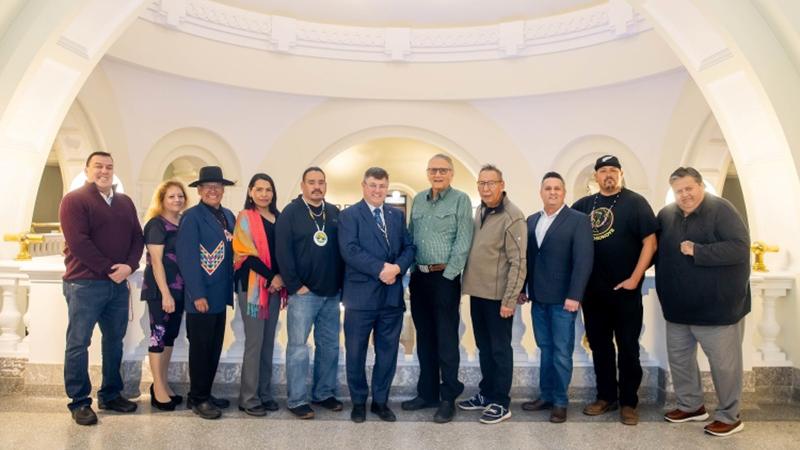
Minister Wilson (centre) with members of the Mental Health and Addiction Wisdom Council. (Government of Alberta)
Mental Health and Addiction Wisdom Council

Province says Indigenous voices to shape recovery-oriented care

Dec 5, 2025 | 2:08 PM

The Alberta government has announced a new Mental Health and Addiction Wisdom Council will provide Indigenous advice, guidance and cultural insight to strengthen recovery-oriented care in the province.

Government officials say the establishment of the Mental Health and Addiction Wisdom Council is a critical step forward for the Alberta Recovery Model to better support Indigenous people in their pursuit of recovery. Officials say the council will serve as a space for collaborative dialogue between Indigenous partners and Alberta’s government, ensuring Indigenous voices, knowledge and lived experiences are meaningfully integrated into the province’s mental health and addiction strategies.

“I’m honoured and excited to work together with such a remarkable group of community leaders in a meaningful way that listens to and respects Indigenous voices – so we can make a real difference in the lives of individuals, families and communities,” says Rick Wilson, Minister of Mental Health and Addiction, in a press release.

Provincial officials say Indigenous communities are disproportionately impacted by substance use and addiction. They represent less than seven per cent of the Alberta population but represent about 20 per cent of all opioid deaths.


The government says partnerships with Indigenous communities are vital to providing access to comprehensive, culturally appropriate services for people suffering from mental health and addiction challenges.

“We recognize that Indigenous communities experience distinct challenges related to mental health and addiction, and that effective solutions must be guided by Indigenous knowledge and culturally grounded practices,” adds Rajan Sawhney, Minister of Indigenous Relations. “This council will provide a platform for Indigenous voices from across the province, ensuring that their perspectives inform the development and implementation of policies and programs that support Indigenous Peoples.”

Government officials say the council met for the first time on Dec. 3 and 4, and will be in place for a year. Its focus will be on providing feedback and input on the design, implementation and evaluation of key policy initiatives such as compassionate intervention, mental health strategies and addiction treatment.

It will also recommend solutions based on community experience and traditional knowledge, and support the co-creation of healing and wellness-centered, recovery-oriented approaches led by Indigenous communities.

The council is composed of Elders, Chiefs, government officials and community leaders, ensuring diverse perspectives from multiple Indigenous communities are represented:

  • Candace Black, vice-chair, Land Based Healing Council Chard Métis Nation (chair)
  • Chief Raymond Powder, Fort McKay First Nation
  • Dwayne Yellowknee, proxy chief, Bigstone Cree Nation
  • Ramona Horseman, former chief, Horse Lake First Nation
  • Leonard Standingontheroad, former chief, Montana First Nation
  • Eric Shirt, former chief, Saddle Lake Cree Nation
  • Reuben (Buck) Breaker, Siksika Nation
  • Hal Eagletail, Tsuut’ina Nation
  • Jodi Two Guns, Tsuut’ina Nation
  • Dr. Tyler White, Siksika Nation
  • Earl Theissen, executive director, Oxford House
  • Trevor Pelletier, manager, Walking the Wolf Trail/Makoyiosokoyii Cultural Community Outreach
  • Evan Romanow, deputy minister, Mental Health and Addiction
  • Coreen Everington, assistant deputy minister, Mental Health and Addiction
  • Sherry Cunningham, community and policy advisor, Indigenous Relations

“I’m honoured to chair the Mental Health and Addiction Wisdom Council, which includes Elders, chiefs, and leaders from across the province,” exclaims Candace Black, chair, Mental Health and Addiction Wisdom Council. “We are the proud Peoples of Turtle Island and we come with the knowledge inherited from our elders and ancestors, willing to share in the spirit of healing and connection.”

Through the Alberta Recovery Model, Alberta’s government says it is working to increase access to mental health and addiction supports in Indigenous communities. This is said to include a $180-million investment in capital grant funding to build five recovery communities in true partnership with Enoch Cree Nation, Tsuut’ina Nation, Siksika Nation, the Blood Tribe and the Métis Nation of Alberta.

In addition, officials say Alberta’s government has allocated almost $7 million in 2025-26 to support community-based mental health and addiction programs that are culturally safe and meet the needs of Indigenous Peoples.

Alberta government quick facts

  • The council will provide a report to the Minister of Mental Health and Addiction with its recommendations by the end of March 2027.
  • Individuals experiencing mental health or addiction challenges can call or text 211 Alberta for information on services and supports in their community.
  • Individuals struggling with opioid addiction can contact the Virtual Opioid Dependency Program (VODP) by calling 1-844-383-7688, seven days a week, from 8 a.m. to 8 p.m. VODP provides same-day access to addiction medicine specialists. There is no waitlist.
  • Individuals experiencing non-opioid substance and behavioural addiction concerns can contact the Virtual Rapid Access Addiction Medicine program at 1-844-383-7688 for rapid, low-barrier access to treatment.