Stay informed with the LNN Daily Newsletter
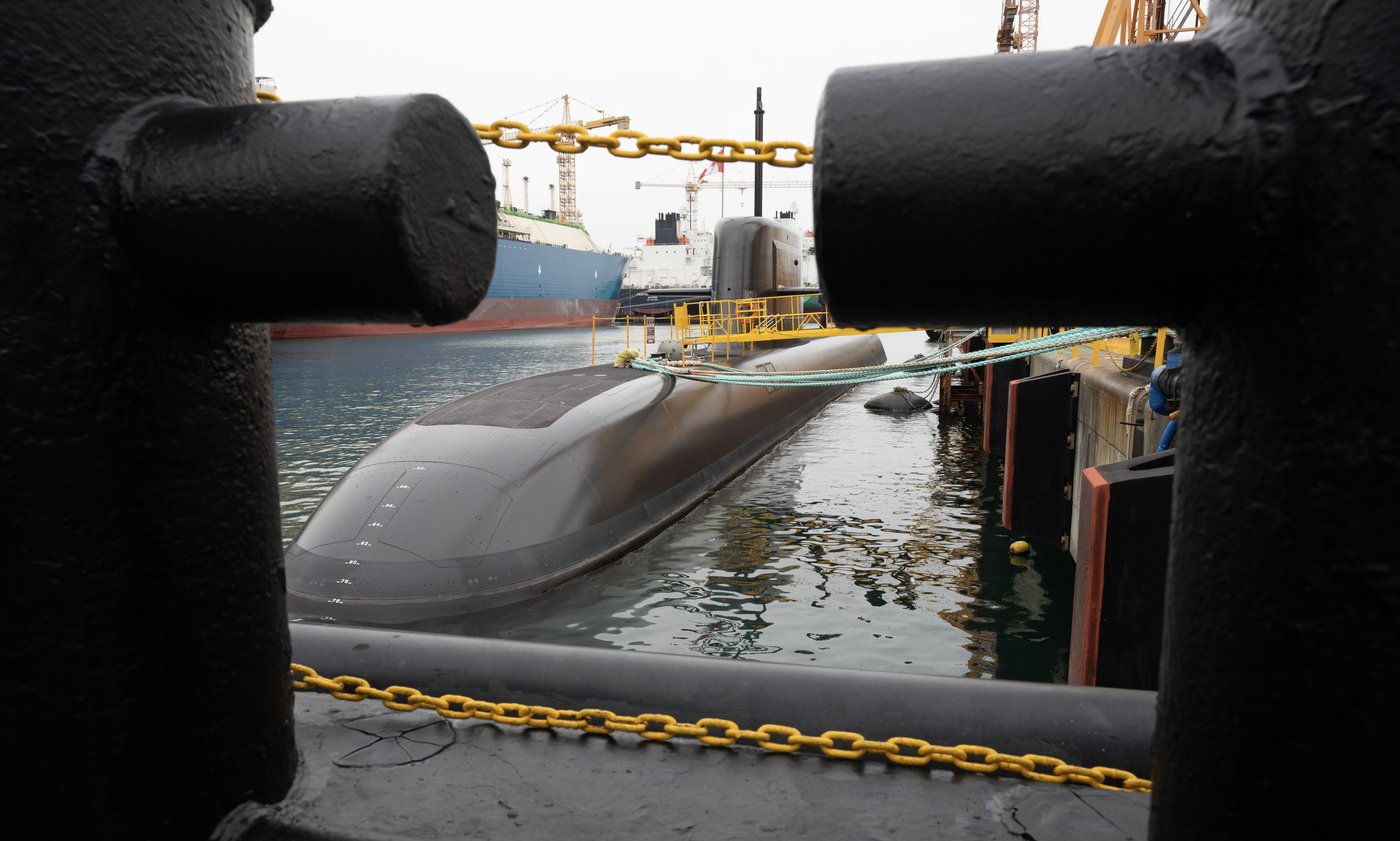
A Hanwha Ocean KSS-III (Batch 2) submarine sits docked in their port in Geoje Island, South Korea Thursday, Oct. 30, 2025. THE CANADIAN PRESS/Adrian Wyld

Hanwha offers made-in-Canada military vehicles if it wins submarine deal

Apr 29, 2026 | 11:01 AM

OTTAWA — South Korean defence manufacturer Hanwha says it’s ready to build military vehicles in Canada, including mobile howitzers, rocket launch systems and infantry vehicles.

But that’s only if it becomes the winning bidder for the Royal Canadian Navy’s next fleet of submarines.

Hanwha said Wednesday it would forge a joint venture with the Automotive Parts Manufacturers’ Association to create a Canadian entity that would build a range of vehicles.

The war machines would be built with Canadian labour, parts and materials, including steel and aluminum, and Hanwha said the joint venture could both supply the Canadian Armed Forces and export to allies.

Canada is planning to buy a fleet of up to 12 conventionally powered submarines. The winning bidder could be announced as early as this year.

Flavio Volpe, head of the Automotive Parts Manufacturers’ Association, said Hanwha reached out about four months ago and invested a lot of time in learning about the capabilities of Canadian automotive suppliers.

The automotive sector is one of the primary targets of a U.S. tariff war that has dragged on for more than a year now.

Volpe, whose industry trade group represents hundreds of parts suppliers, said auto assembly in Canada has dropped by about a third since U.S. President Donald Trump started his trade war. He said the automotive industry is notoriously difficult to diversify.

While demand for military vehicles likely would never reach the level of passenger vehicles, he said, defence contracts are highly coveted.

“The value of (defence auto part) contracts, the certainty of the jobs that come with those contracts, the maintenance, repair and overhaul 20- and 30-year carry contracts are the types of business diversification that this industry desperately needs,” Volpe said.

The proposed joint venture would have Canadian majority ownership and board membership — although it’s not clear yet exactly how the agreement would work in practice, since a lot depends on the success of Hanwha’s bid.

“It might be that the best move is to set up a new plant,” Volpe said. “But it also might be that one or more of the major Canadian automotive suppliers, like a Martinrea or a Linamar, could do that assembly in one of their plants and act as the as the assembler for all the other sub-component suppliers.

“You have to do the business case on each vehicle.”

The military vehicles that would be produced by the proposed joint venture would include Hanwha’s K9 Thunder howitzer, the K10 ammunition resupply vehicle, the Redback infantry vehicle, the Chunmoo rocket launcher and uncrewed ground vehicles.

The joint announcement on Wednesday was made in Vaughan, Ont., at a Martinrea facility which produces metal parts for Toyota, Lexus and General Motors.

Wednesday was the government’s deadline for the submarine makers to amend their bids.

Ottawa gave the two rival bidders — Hanwha and Germany’s TKMS — extra time to sweeten their offers in the hope they would sign more partnerships with Canadian companies.

Secretary of State for Defence Procurement Stephen Fuhr said this shows the government’s strategy for the submarine procurement is working, since the companies got the message that the winning bidder would be the one offering to deliver the most economic value for Canada.

“They’re great companies and because there’s only two, they have a 50 per cent chance of winning this and they know what the stakes are,” Fuhr told reporters on Parliament Hill on Wednesday.

“So guess what? They’re putting their best foot forward and we’re happy to see that.”

The federal government is looking to have its first new submarine in the water by 2032.

This report by The Canadian Press was first published April 29, 2026.

Kyle Duggan, The Canadian Press