Stay informed with the LNN Daily Newsletter
(Image Credit: ID 6843581 © Mikael Damkier | Dreamstime.com)
don't let it loose

Albertans urged not to release pet fish into local waterways

Jul 21, 2026 | 9:53 AM

Albertans are being reminded not to put aquarium fish or plants into public waters.

The Don’t Let It Loose campaign urges against introducing these invasive species into ponds, lakes, rivers and other waterways where they could destroy the local ecosystem and even human health.

The reminder comes after a 30 cm, 2.4 lb goldfish, roughly the size of a dinner plate, was removed from the Drake Landing stormwater pond in Okotoks.
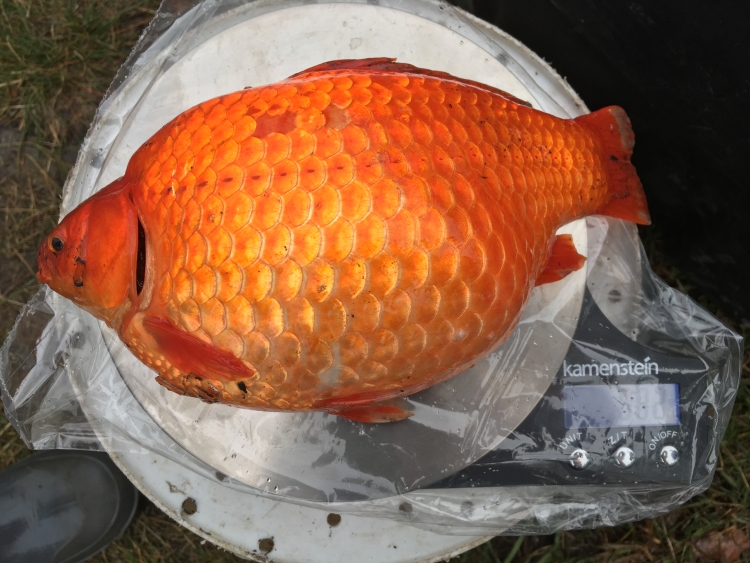

(Image Credit: Government of Alberta)

Albertans should also report sightings of invasive fish, a media release states.

You can do so by calling the Aquatic Invasive Species Hotline at 1-855-336-BOAT (2628) and, where possible, provide a clear photo showing the fish’s entire body and fins for staff follow-up.

It is also illegal in Alberta to move live fish from one water body to another.

Penalties for illegally transferring fish can be up to $100,000 and/or one year in prison. If you witness the suspected intentional release of an aquatic invasive species in Alberta, call the 24/7 Report A Poacher hotline toll-free at 1-800-642-3800.

More about Don’t Let It Loose, including an invasive species pocket guide, is available here.

Quick facts

  • Invasive fish can thrive in harsh, changing environments, giving them an advantage over native species and threatening Alberta’s aquatic ecosystems.
  • A single released goldfish can produce an estimated 40,000 offspring within three years, reproducing up to three times annually.
  • Invasive fish are opportunistic feeders, consuming almost anything organic, including small fish, aquatic insects and vegetation.
  • Invasive fish carry diseases and parasites that can be introduced into the environment, including from fish that have been inappropriately disposed of – dead or alive.

READ MORE: Invasive Prussian carp species found in Sylvan Lake prompts awareness campaign