Stay informed with the LNN Daily Newsletter
(Image Credit: GoA)
WATERWAY DEFENCE

Alberta launches Canada’s first watercraft dip tank in Dunmore to fight invasive aquatic species

Aug 27, 2026 | 3:06 PM

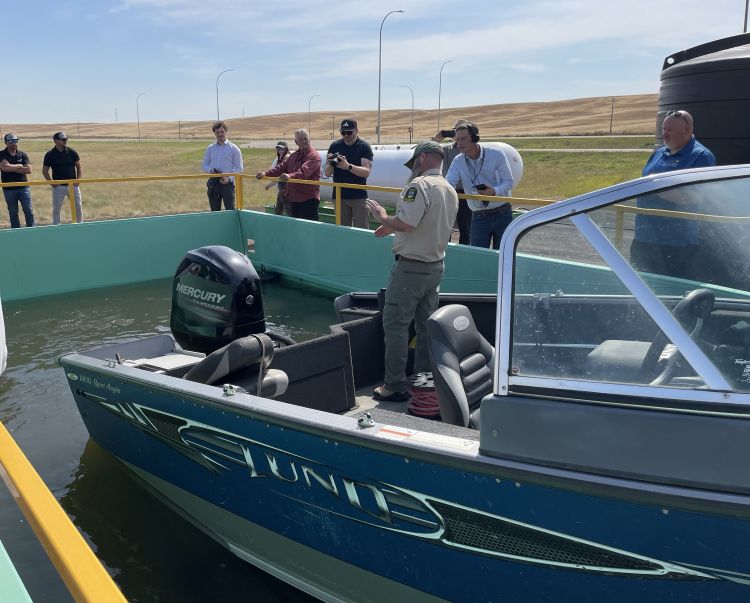
Alberta is introducing Canada’s first watercraft dip tank at its Dunmore inspection station as the province works to keep invasive aquatic species out of its waterways.

The tank uses hot water to treat trailered boats, killing mussels, larvae and other invasive species on hulls, intakes, engines and ballast tanks.

The system is large enough to fully submerge watercraft and is designed to be particularly effective for larger boats with ballast systems that can be difficult to clean through conventional methods.


(Image Credit: GoA)

“Alberta is taking action to stop aquatic invasive species from spreading,” Environment and Protected Areas Minister Grant Hunter said in a news release Thursday.

“By investing in innovative solutions like a dip tank, we are protecting our lakes, rivers and reservoirs for generations to come.”

The Dunmore tank is part of the province’s broader strategy of preventing aquatic invasive species from entering Alberta.

The province is also developing a mobile dip tank using hot water to treat watercraft and trailers at high-priority locations, inspection stations and shorelines, with the unit expected to be operational by summer 2027.

Justin Wright, MLA for Cypress-Medicine Hat, said the investment will help protect water systems important to southern Alberta.

“Southern Alberta knows how important reliable, healthy water systems are to families, farmers and communities,” Wright said in the release.

“This dip tank pilot is a smart investment that will help protect our lakes, rivers and irrigation infrastructure from invasive mussels before they can take hold.”

Cypress County Mayor Dan Hamilton has said in a statement that the new system will strengthen the work already being done at watercraft inspection stations in the region.

“These proactive measures help safeguard our irrigation systems, ecosystems and water resources for communities, agriculture and future generations.”

The City of Medicine Hat also welcomed the provincial investment, with acting Mayor Stuart Young praising the proactive approach to protecting the region’s waterways.

“The City of Medicine Hat is grateful for the Government of Alberta’s investment in innovative solutions that help protect our waterways from aquatic invasive species,” Young said in a release.

“Preventing these threats from taking hold is far more effective than managing the long-term environmental and economic impacts they can create, and this proactive approach helps safeguard our region’s water resources for years to come.”

Alberta’s waters remain free of invasive mussels, despite eight watercraft carrying the species being intercepted in the province so far this year.

That follows 21,995 boat inspections in 2025, when 13 watercraft carrying invasive mussels were detected. The contaminated watercraft had entered Alberta from eastern Canada or the United States.

With the threat continuing to come from outside the province, Budget 2026 included more than $10 million to prevent aquatic invasive species from entering Alberta.

The funding includes $4.6 million for 12 watercraft inspection stations, up from 11 last year, as well as $275,000 for decontamination stations in Lethbridge and Edmonton and $525,000 for three Conservation K-9 teams.

The effort is aimed at preventing invasive mussels from becoming established, which can damage ecosystems and infrastructure, including irrigation systems, while creating high environmental and economic costs.

The province is also developing the mobile dip tank with the Okanagan Basin Water Board, based on an original concept from the University of British Columbia’s School of Engineering.