Stay informed with the LNN Daily Newsletter
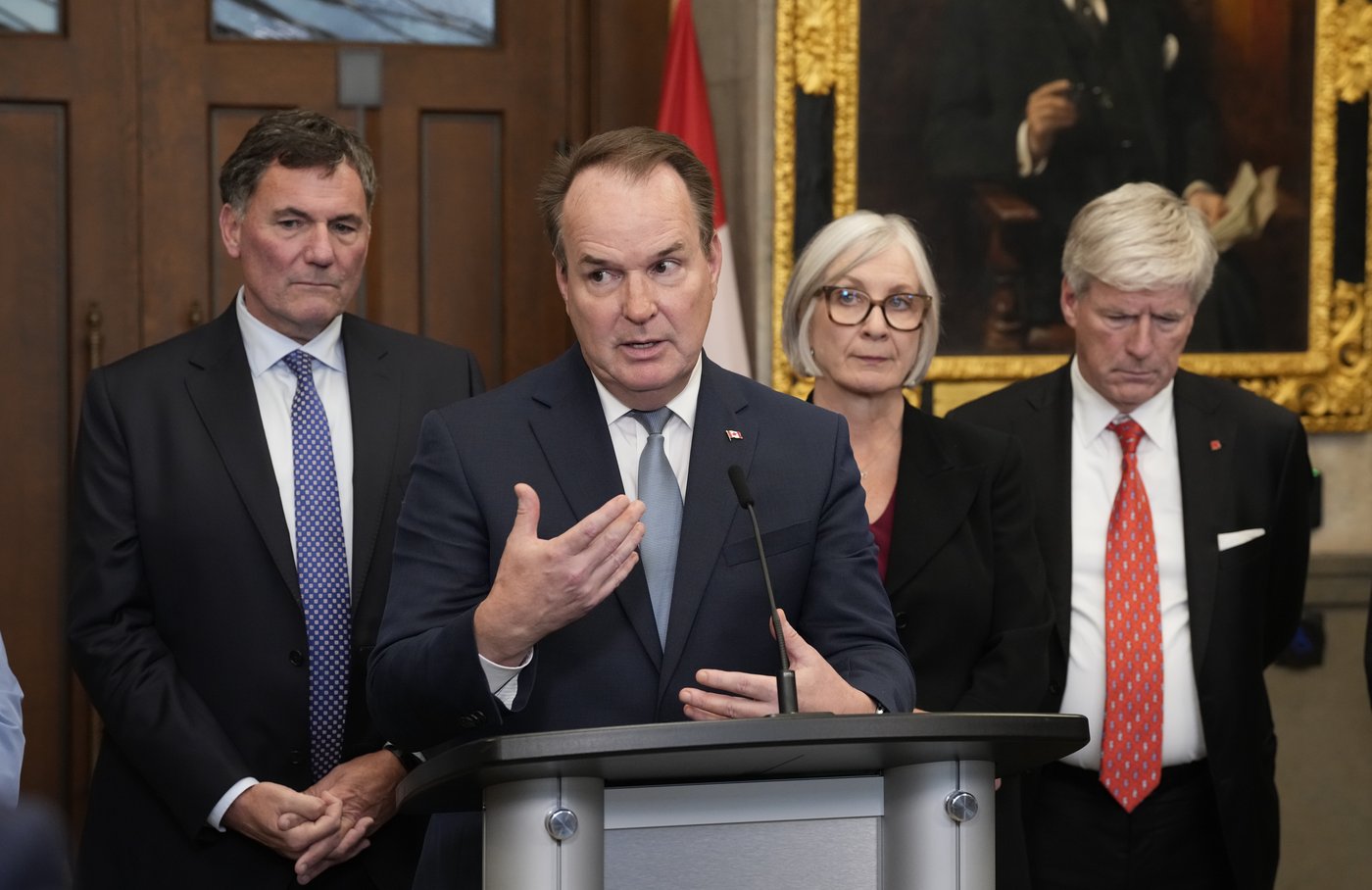
Canada-U.S. Trade Minister Dominic LeBlanc, Jobs and Families Minister Patty Hajdu and Energy and Natural Resources Minister Tim Hodgson listen to Steven MacKinnon, leader of the government in the House of Commons, respond to a question during a news conference in the Foyer of the House of Commons in Ottawa on Monday, Sept. 21, 2025. THE CANADIAN PRESS/Adrian Wyld

Five things to know about the Liberals’ new Building Canada Strong Act

Sep 21, 2026 | 4:08 PM

OTTAWA — Prime Minister Mark Carney’s government tabled a bill Monday to fast-track approvals for major projects.

The Building Canada Strong Act removes the responsibility for reviewing many big projects, such as pipelines and power transmission lines, from the Impact Assessment Agency of Canada. It also proposes changes to the Canada Labour Code.

The federal government has said it has been told by industry that the Impact Assessment Agency doesn’t have the Canada Energy Regulator’s level of expertise on energy projects.

Here are five things to know about the legislation.

Bill outlines “regions of national interest,” changes project approvals structure

Proposed new “regions of national interest” would afford projects within their boundaries the same treatment as projects of national interest. The legislation would require consultations before an area receives the designation and would allow special exemptions to a dozen different laws for projects within regions of national interest.

The bill also proposes removing the responsibility for reviewing many big projects, such as pipelines and power transmission lines, from the Impact Assessment Agency of Canada.

The Canada Energy Regulator would be responsible for handling reviews of international and interprovincial pipelines, transmission lines and offshore renewable energy projects. The Canadian Nuclear Safety Commission would handle reviews for nuclear and uranium projects.

Senior government officials also said the bill looks to amend the Impact Assessment Act to establish one-year federal review timelines, while timelines for small and medium projects under the Energy Regulator and Nuclear Commission would be reduced from one year to six months.

Bill changes the way Section 107 of the Labour Code works

Many of the proposed changes outlined in the bill revolve around Section 107 of the Labour Code — a contentious part of the law that allows the labour minister to have the Canada Industrial Relations Board step in to end a strike or lockout to maintain “industrial peace.”

The section has been used to end strikes in multiple sectors in recent years, including airlines, ports and railways.

Labour leaders were hoping to see that section repealed or restricted, while employers indicated they want to see a stronger degree of government intervention when a labour disruption might put Canada’s economic interests at stake.

A government official briefing reporters after the legislation was tabled Monday said the jobs minister won’t gain any new powers through the legislation.

The minister would instead have to fulfil two conditions before using Section 107 — one of which would require the minister to declare that a dispute is adversely affecting “the national interest.”

The “national interest” could relate to impacts on the Canadian economy and whether a strike is causing what the government calls “serious social disruption.”

The minister also would have to consider a report from a new special mediator being introduced under the legislation. That mediator would be tasked with setting out the parties’ positions and could offer recommendations toward a new collective agreement.

Proposed changes received pushback from environmental groups

The government said earlier this month it had abandoned plans to exempt certain projects from laws designed to protect species at risk, after receiving an overwhelmingly negative response to the proposal during consultations.

The Building Canada Act — which was passed as part of the controversial Bill C-5 last summer — still gives Ottawa the power to allow projects with a “national interest” designation to skirt a dozen laws, including the Species At Risk Act.

In June, when environmental groups were on Parliament Hill lobbying against the proposals, Carney said the government was “absolutely not” tossing away environmental protections.

Liberal ministers say the changes are needed to strengthen the Canadian economy

A handful of ministers spoke in support of the legislation on Monday, including Jobs and Families Minister Patty Hajdu, Canada-U.S. Trade Minister Dominic LeBlanc, Natural Resources Minister Tim Hodgson and Transport Minister Steven MacKinnon.

LeBlanc said the bill offers opportunities to get more major projects built and to boost employment, while MacKinnon said it gives the country tools to build more efficiently.

“We cannot control decisions made by other countries, but we can control how we are prepared here at home. To do that, we need the right infrastructure,” MacKinnon said.

Hajdu said the country needs a strong labour code that fosters and protects healthy workplaces and employer-union relationships.

“Our goals are simple: it’s to strengthen the framework, support the responsibility to negotiate in good faith that the parties themselves have, and to protect workers’ rights, including their constitutional right to strike,” she said.

Opposition leaders, MPs question changes

Opposition leaders raised concerns before the bill’s tabling about changes to the labour code and accused Carney of cozying up to foreign investors to the detriment of Canada.

During question period on Monday, NDP MP Don Davies accused the Liberals of siding with wealthy investors instead of standing with workers who want fair and safe workplaces.

“New Democrats know that to truly build Canada strong, we need a healthy and respected working class. It’s workers who build this country and keep it moving,” he said.

Green Party Leader Elizabeth May said she doesn’t like how the Liberals intervene in collective bargaining and she doesn’t think changes to the code are in the interests of Canada’s economy.

Bloc Québécois Leader Yves-François Blanchet said the bill is “one more token placed on the table in order to attract huge foreign businesses in Canada, telling them that there will be no more environmental regulations, much less work regulations, and that things will be easy.”

Conservative House leader Andrew Scheer declined to comment on the bill Monday, saying he would wait to see the legislation before offering remarks.

This report by The Canadian Press was first published Sept. 21, 2026.

— With files from Nick Murray, Craig Lord and Alessia Passafiume

The Canadian Press