Stay informed with the LNN Daily Newsletter
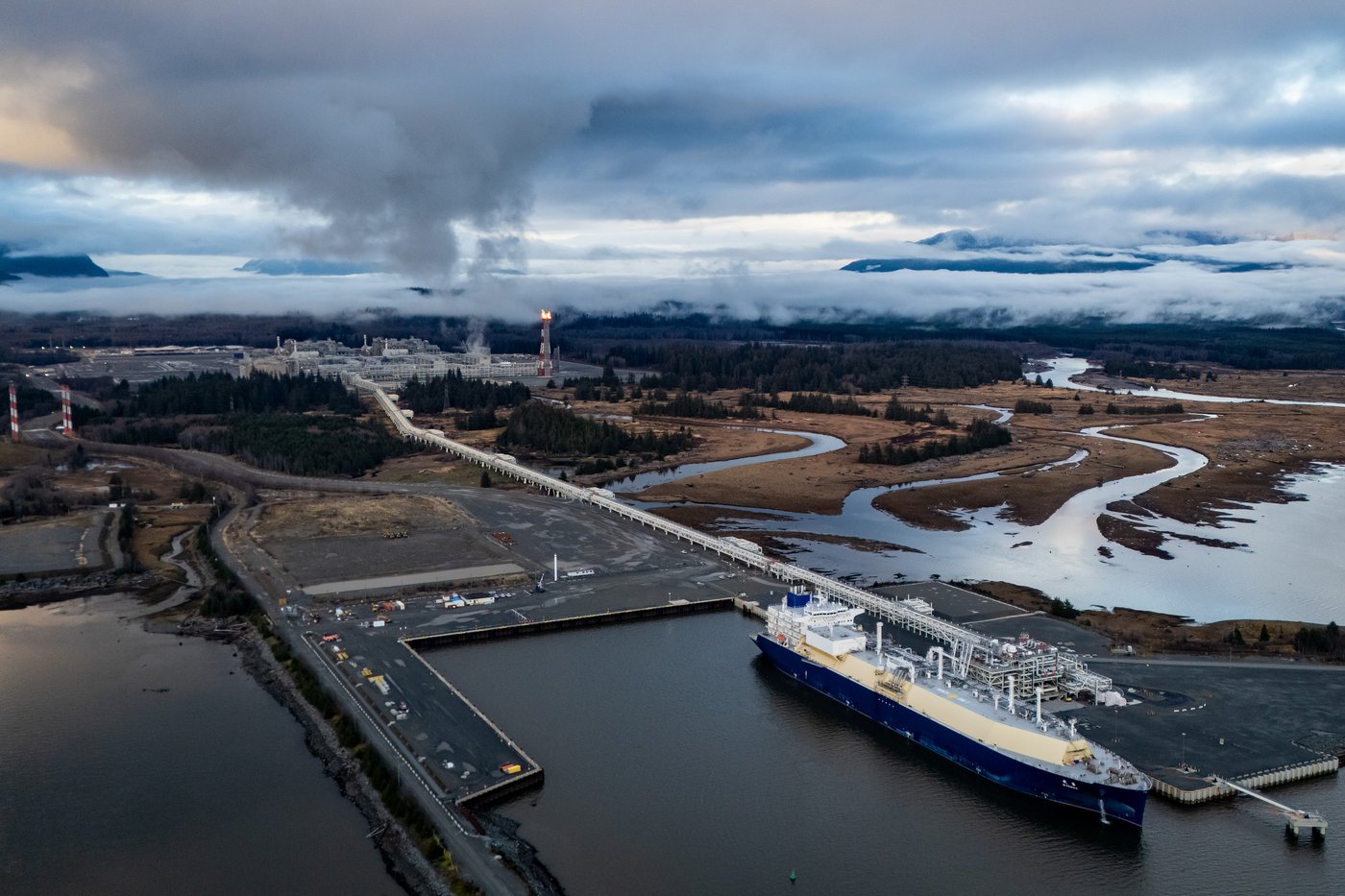
Wudang, a liquefied natural gas (LNG) tanker, fills up at an LNG Canada facility, in an aerial view, in Kitimat, B.C., on Thursday, November 13, 2025. THE CANADIAN PRESS/Ethan Cairns

LNG Canada to go ahead with Phase 2 expansion project in Kitimat, B.C.

Sep 29, 2026 | 4:34 AM

VANCOUVER — LNG Canada says it will go ahead with the Phase 2 expansion project at its liquefied natural gas export terminal in Kitimat, B.C.

The expansion will double LNG Canada’s capacity to 28 million tonnes a year.

It is one of the five initial projects that were referred to Ottawa’s major projects office last year.

LNG Canada CEO Chris Cooper says the project will create thousands of jobs and further strengthen Canada’s role as a trusted energy partner.


“LNG Canada Phase 2 is another nation-building investment that demonstrates Canada can build big things when governments, First Nations partners, local communities, skilled trades, contractors and investors work together with shared purpose,” Cooper said in statement.

LNG Canada is a joint venture between Shell and Malaysia’s Petronas, PetroChina, Japan’s Mitsubishi Corp. and South Korea’s KOGAS.

The company exports natural gas that is piped from northwestern Alberta and northeastern British Columbia to the plant in Kitimat, where it is chilled into a liquid state and then loaded onto specialized tankers bound for Asian markets.

The expansion will build on the footprint and infrastructure of the first phase of the project, which began shipping liquefied natural gas last year.

It will add two additional LNG processing units, known as trains, as well as an additional LNG storage tank, condensate tank, loading berth, and expanded utility and process systems.

LNG Canada also said it is working with Coastal GasLink to expand the capacity of the existing 670-kilometre pipeline, which is operated by TC Energy Corp.

In a separate announcement following the LNG Canada decision, TC Energy said it would nearly double the existing capacity of Coastal GasLink by adding new compressor stations and upgrading facilities along the route from Dawson Creek to the LNG Canada liquefaction facility in Kitimat.

“Phase 2 will strengthen Canada’s role in supplying reliable, affordable and secure energy to global markets while creating long-term value for Indigenous and local communities, customers and shareholders,” TC Energy CEO François Poirier said in a statement.

LNG Canada will lead the expansion project construction, while Coastal GasLink will remain the owner, operator and permit holder of the pipeline and associated facilities.

The first phase of LNG Canada has been beset by equipment issues that have resulted in flaring in excess of what’s allowed under its permits. Flaring is the controlled burning of natural gas for safety reasons.

The LNG Canada partners have said it’s a normal part of project startup, but environmental and community groups have raised concerns about the health and safety impacts.

This report by The Canadian Press was first published Sept. 29, 2026.

Companies in this story: (TSX:TRP)

The Canadian Press