Stay informed with the LNN Daily Newsletter
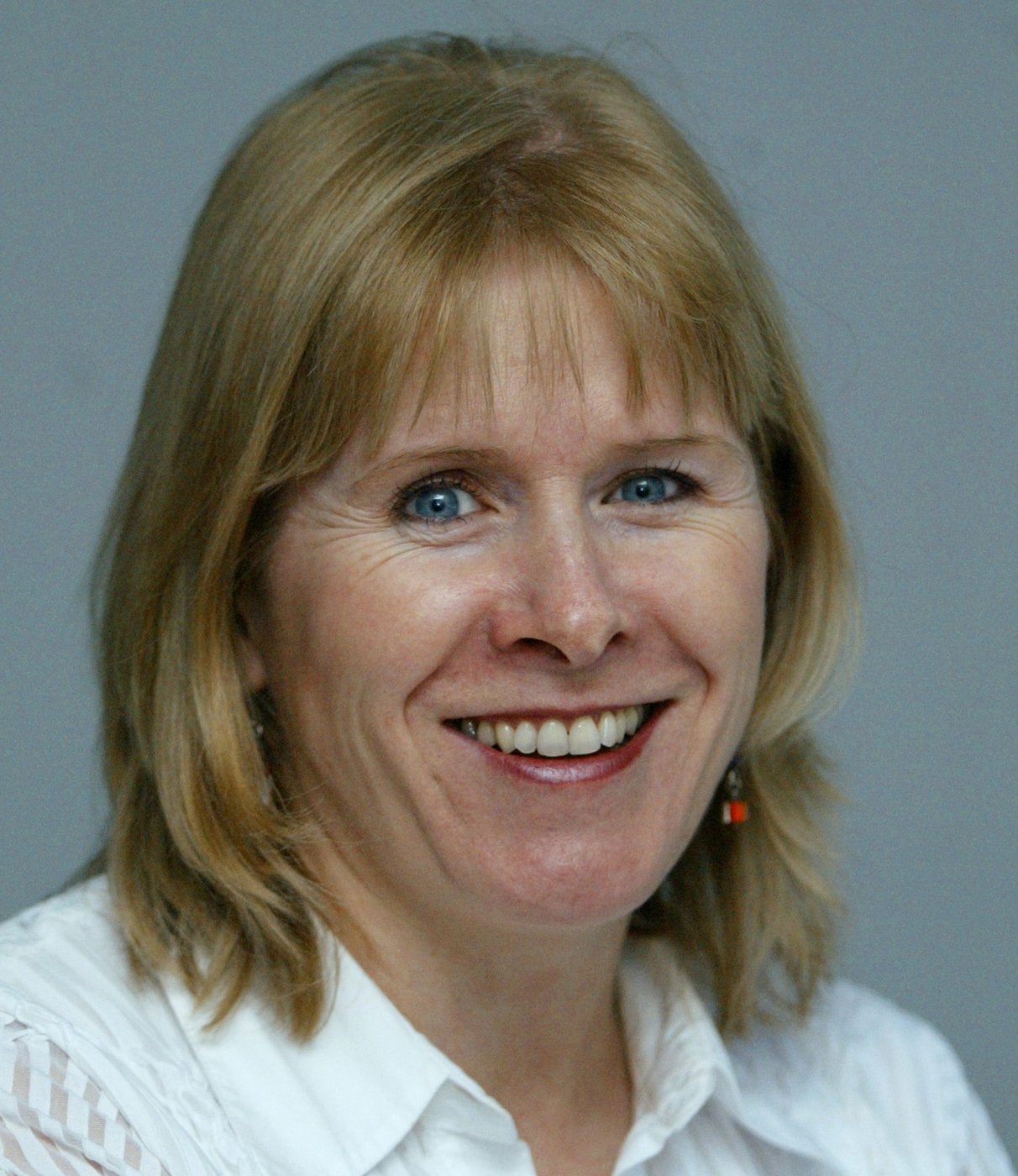
Reporter Helen Branswell, is shown in the Toronto offices of The Canadian Press, on Thursday April 8, 2004. THE CANADIAN PRESS

Former CP health reporter Helen Branswell remembered as excellent journalist and loving person

Oct 14, 2026 | 9:03 AM

TORONTO — Helen Branswell, the former Canadian Press health reporter known for her award-winning infectious disease coverage, died Tuesday from complications from cancer. She was 69 years old.

Branswell spent nearly 30 years at The Canadian Press, beginning as a general assignment reporter before eventually landing on the health and medical beat, where she established herself as an essential source of information through her dogged reporting, including of the 2003 SARS outbreak.

Later, while working at the Boston-based health news outlet STAT, her exhaustive coverage of the COVID-19 pandemic proved prescient and garnered her acclaim as she emerged as an authoritative voice on the virus.

“She leaves behind a very significant record as a journalist, an excellent journalist,” said Jack Branswell, her younger brother. “But we just also knew her as our sister and somebody who really cared and loved people.”


Branswell joined the wire in 1986, first working as a reporter-editor out of the Halifax bureau. In the following years, she spent time in Calgary, Ottawa and London, England. She covered a range of stories and topics, including politics, foreign affairs and sports.

In 2000, Branswell moved to the Toronto bureau, and it was there that she discovered her passion for health and medical reporting.

She spearheaded coverage of the 2003 Toronto SARS outbreak. Branswell became a fixture at daily news briefings, never shying away from asking probing questions that helped readers better understand the emerging medical threat.

“Her work was absolutely stellar,” said former CP health reporter Sheryl Ubelacker. “She developed all kinds of sources and she was really on top of the story and probably led everybody on that particular epidemic. She did wonderful work.”

At CP, Branswell also covered bird flu, polio and Ebola and demonstrated a relentless dedication to the demands of the health beat. She wrote science-backed stories with precision and accuracy, Ubelacker said, but did so in a way that the average reader or listener could comprehend.

“After she realized how much she loved medical reporting, it became a calling,” Ubelacker said. “And she was going to do the very best job she could ever do.”

Following her time at CP, Branswell joined STAT when it launched in 2015. There, she continued to report on infectious diseases and global health until the time of her death.

In January 2020, she published a detailed report on an emerging outbreak believed to be caused by a coronavirus when there wasn’t much reliable information in the U.S. about what would later become known as COVID-19. According to a 2021 news release from STAT, the veteran reporter, citing experience covering SARS, recognized the dangerous potential of the virus early when she saw an alert about four unexplained pneumonia cases in China in December 2019.

Branswell became an authority on the pandemic and COVID-19 through her continued coverage, leading to multiple accolades including winning the George Polk Award for Public Service in 2021. That same year, Branswell and her colleagues were finalists for the Pulitzer Prize for pandemic reporting.

“She was already on her way to becoming a legend and that story made her a legend in my estimation,” said Gerry Arnold, the former executive editor of The Canadian Press and longtime friend of Branswell. “The Canadian Press has turned out many, many, many great journalists over the years and Helen would be near the very, very top of that list of the greats.”

Branswell was born in Sherbrooke, Que., as one of six children. Her brother said she would say “she fell into” her career as a reporter. After graduating with a bachelor’s degree in English literature from St. Thomas University in Fredericton, she freelanced for the local newspaper, The Daily Gleaner, before working there full time.

Arnold first met Branswell in Halifax while she worked for the wire and he reported for a local newspaper. Later, when Arnold joined the wire service, they worked together on Parliament Hill during the early 1990s.

Then, Arnold said, he and Branswell were part of a tight-knit friend group who held dinner parties for those who didn’t have family close by. Arnold described Branswell as the person who “made every dinner party she attended better,” making sure the music was playing and the wine was cold. She was always quick to laugh, too, he said.

“She was a fabulous friend to so many people and the life of the party,” Arnold said. “I’ll never forget those Ottawa dinner parties.”

Her brother said she often would check in on people, especially if they were experiencing difficult things in their lives, but never wanted to take credit for her kindness.

“She did a lot of things quietly and in the background and she was a wonderful, wonderful human being,” Jack said.

As for her reporting, Arnold said what made Branswell stand out was her fearlessness.

“She was never intimidated by power or the pretension of power,” he said. “It didn’t bother her to stand up in a crowded news conference and ask an awkward question of somebody in a position of power that she knew might make waves or might make them feel uncomfortable. She didn’t care about that. She was there to get the story.”

Jack said his sister approached her work as a public service to keep people informed.

“A lot of people have reached out and said, ‘Your sister was kind of a light and a beacon at the start of the pandemic when we all had no information,'” he said.

Following news of her death, the director-general of the World Health Organization, Tedros Adhanom Ghebreyesus, said in a statement posted to X that Branswell was a journalist with “integrity and professionalism”

“Throughout her career, Helen demonstrated an unwavering commitment to evidence, science and truth, helping the public understand some of the most complex and consequential health challenges of our time. At a moment when misinformation competes with facts, her reporting was a trusted source of clarity, honesty and insight,” the statement read.

During her career, Branswell earned numerous awards and honours, including the Victor Cohn Prize for Excellence in Medical Science Reporting and an honorary degree from Ottawa’s Carleton University in recognition of her outstanding career.

She also received several fellowships, including the Southam Fellowship at the University of Toronto and the Nieman Global Health Fellowship at Harvard University, focusing on polio eradication. As a CDC Knight Fellow in 2004, she embedded at the Centers for Disease Control and Prevention for three months.

Her brother said he looked up to Branswell, and followed in her footsteps to pursue journalism along with their sister, Brenda. He said he hoped people remember Helen always sought to bring truth out into the world as a reporter and that “aside from being a fantastic journalist, that she was just such a loving and caring person.”

This report by The Canadian Press was first published Oct. 14, 2026.

Kaitlyn McGrath, The Canadian Press