Stay informed with the LNN Daily Newsletter
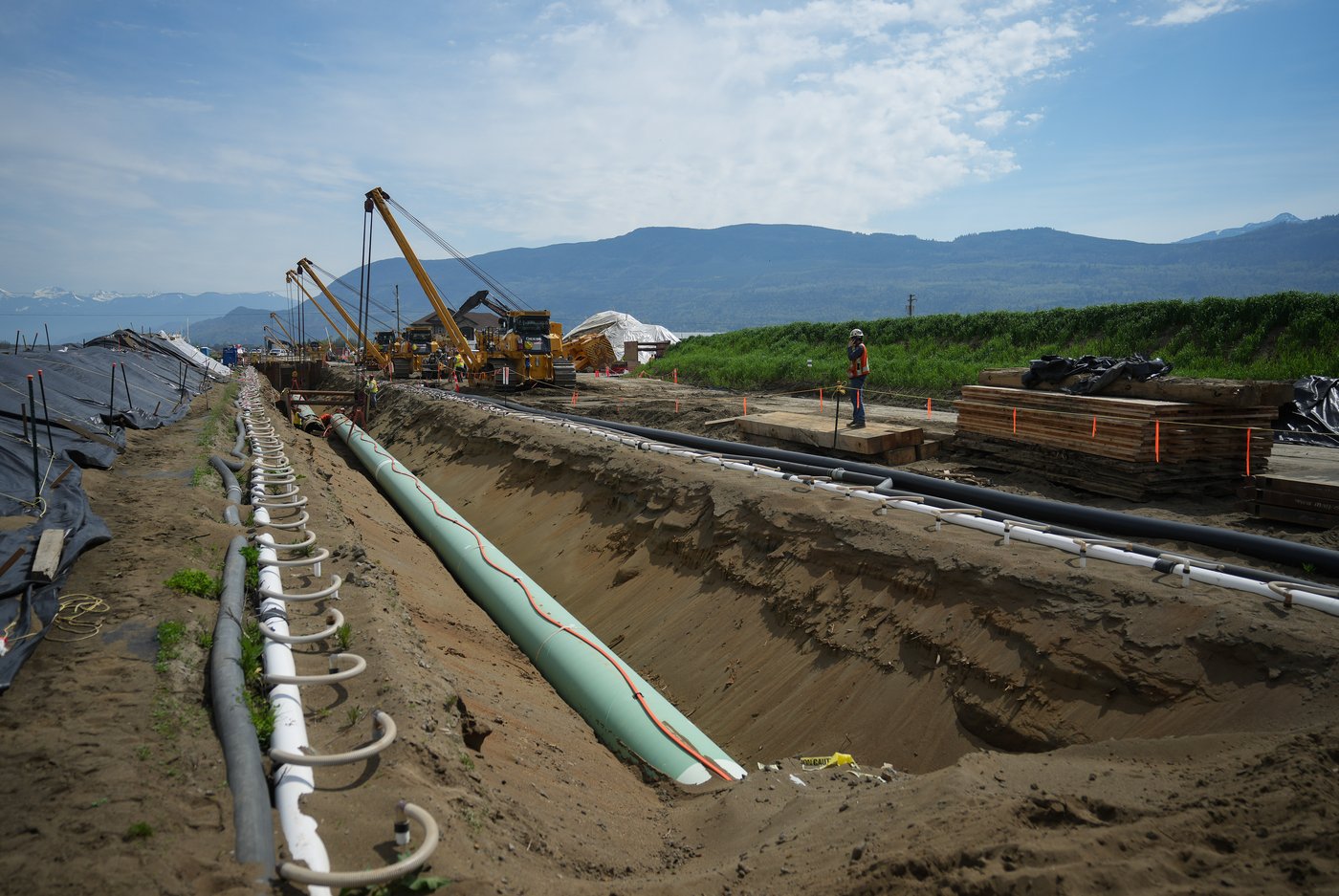
Workers lay pipe during construction of the Trans Mountain pipeline expansion on farmland, in Abbotsford, B.C., on Wednesday, May 3, 2023. THE CANADIAN PRESS/Darryl Dyck

Ottawa will need other ways to cut emissions to compensate for oil pipeline: Farrell

Oct 28, 2026 | 1:18 PM

OTTAWA — The head of the major projects office says Ottawa will need new ways to cut emissions to meet its climate goals because the proposed Pacific Link oil pipeline will emit more than the Pathways carbon capture project will sequester.

Dawn Farrell, CEO of the major projects office, answered questions from MPs during an appearance before the House of Commons environment committee on Tuesday.

Citing the energy agreement between Canada and Alberta, Farrell told the committee the Pathways project is expected to reduce emissions by 16 million tonnes a year.

“We did assess what the greenhouse gas emissions would be from the pipeline itself, and it does bring up the emissions a bit,” she told the committee.


“And of course, Canada, through its various greenhouse gas strategies, will have to find a way to reduce that by 2050, given our goals for 2050.”

An analysis by Environment Canada, submitted to the committee and provided to The Canadian Press, projected the emission reductions from Pathways at 22 million tonnes a year.

Environment Canada also estimated that transporting an extra million barrels of oil a day through the new pipeline would increase emissions by 27.7 million tonnes.

To meet its 2030 target under the Paris Agreement, Canada still needs to reduce emissions by 227 million tonnes annually, based on the latest estimates from 2024.

One million tonnes is equivalent to what is emitted by 233,000 passenger vehicles over a year.

In July, Ottawa and Alberta signed an agreement with five of Canada’s major oil companies to advance the Pathways project.

The agreement made the Pacific Link pipeline conditional on getting Pathways built.

Asked by MPs on Wednesday what would happen if the oil companies suddenly reversed course and decided not to build it, Farrell said the major projects office could bake it into the conditions document for the pipeline.

“If Pathways wasn’t going to be underway, it would have to be a condition in our mind of the final conditions document that the Pathways project would be built in order for the (pipeline) to go ahead,” Farrell said.

“That’s what that conditions space is for.”

Manitoba Conservative MP Branden Leslie pressed Farrell over the fact that the conditions document issued by the major projects office is only a recommendation and the federal cabinet has the final say.

“Does cabinet have a veto on those conditions ultimately?” Leslie asked.

“You can make that as a recommendation. (But) can cabinet say, ‘No, in fact, never mind. We don’t need to build the pathways project. Go ahead with the pipeline’?”

“Well given that the Prime Minister is the one who’s very determined to have Pathways, I’m not sure why that would happen,” Farrell replied.

“But certainly cabinet, it’s at their discretion. They make the decision.”

This report by The Canadian Press was first published Oct. 28, 2026.

— With files from Lauren Krugel in Calgary

Nick Murray, The Canadian Press