Stay informed with the LNN Daily Newsletter
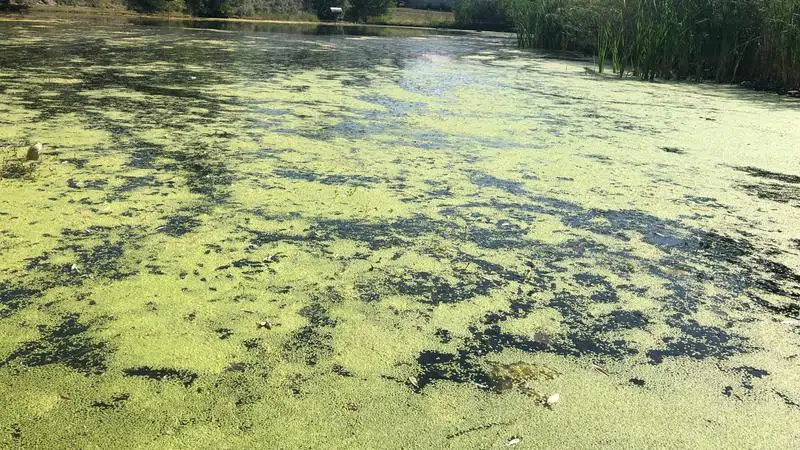
Algae and weeds growing in stagnant water at the Alberta Birds of Prey Centre in Coaldale
West Nile Concerns

Coaldale residents worried about water levels in ponds near Birds of Prey Centre

Aug 8, 2019 | 1:21 PM

COALDALE, AB – The scum and algae has become so thick in many areas of the Town of Coaldale ponds, Alberta Birds of Prey Centre staff have begun bringing some of their more vulnerable and valuable birds in at night just to be on the safe side.

Nearly a year ago 15 hawks, owls and eagles died of West Nile Virus at the well-known non- profit rehabilitation and education centre. A Lethbridge woman who also visited the area during that time succumbed to the illness. There was no public warning or advisory in 2018 about a potential outbreak or risks from the Town of Coaldale, Alberta Environment or Alberta Health Services.

A report presented to Town of Coaldale Council members in late July concluded that a Town changeover of staff, lack of knowledge, a breakdown in communication, weather and location were all contributing factors to the deadly outbreak. The construction of Phase 2 of the Malloy Drain Implementation Project did not have a role to play in the outbreak, according to the report.

So far this year, it doesn’t appear as though anyone or any animals have been infected. However, for residents like Liz Allen, that’s little comfort when she walks or bikes around Town ponds that are now covered in green algae and weeds. She’s lived in the area for 42 years.

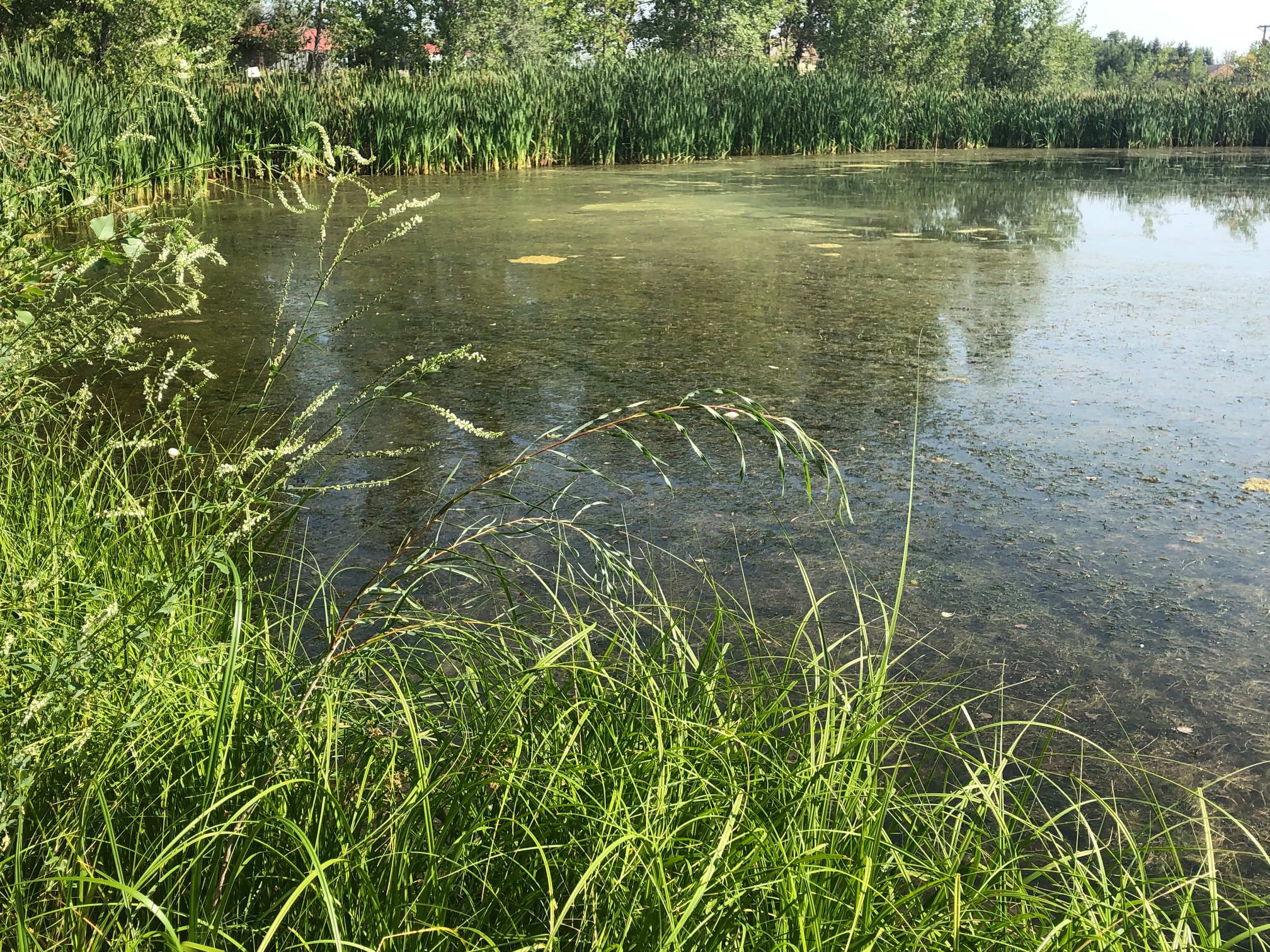
“Right now, water levels are so low, they’re perfect. The heat is just lovely for those mother mosquitos to get out there and plant as many eggs as she can.”

Low water levels, algae and weeds developing on town controlled ponds in Coaldale worry residents

She says she has tried contacting the Town of Coaldale several times about pond-related issues near her home, with little success.

“Frankly, I’m tired of asking…we can’t afford to lose 15 more birds. We had a person die last year who visited the area. I live near it. I have horses. Horses often die more times than not, when they get West Nile and get bitten by a mosquito.

“I can’t understand. It’s a simple process. You turn the water on, you flush it (the ponds) out. You keep your water levels up. It’s not rocket science.”

Colin Weir, the Birds of Prey Managing Director, says they’ve had several calls from residents who walk their animals in the area at night, as well as visitors.

“We just received an email a day and a half ago (from the Town), just asking if the pond levels in our little site are adequate and if we want them raised at all. So, we’re just waiting to hear back from them, to hear what they say. Ideally, it might have been better if it was done back in mid-July, right?”

Weir wants to emphasize that no birds have been infected to date, and the risk to visitors and birds is likely lower than last year.

Still, Allen hopes that the stagnant pond conditions don’t continue for the rest of the summer.

“I want to see this water moving properly so that we’re not creating a breeding ground and I want the Town to take responsibility for it and make sure it’s getting done.”

The Town of Coaldale has issued a public notice about mitigating the risk of West Nile Virus and says it is “committed to mitigating future risks of the West Nile Virus (WNv) in Town and in the surrounding area.”

According to the notice, the town is implementing three strategies this year:

  • · Spraying bacterial larvicide: an environmentally friendly spray to reduce the mosquitoes associated with transmitting the disease,
  • · Attracting Swallows: a biological control for mosquitoes
  • · Monitoring and eliminate any shallow standing water

Kyle Beauchamp, Director of Corporate Services, tells LNN that the ponds are monitored daily and they’re deeper than most people think.

“The ponds right now are at their regular depth. They’re quite deep ponds, even though they may not look like they’re completely full. They’re at their current levels they should be. So, what the town does to monitor the ponds, is they inspect them daily to make sure they’re at the right levels and if they need to be raised or lowered, the Town works in collaboration with St. Mary’s River Irrigation District and they adjust the water level if they need to.”

At this point however, the Beauchamp says the Town doesn’t want to risk flooding other ponds and they don’t believe the water is low enough to be a cause for concern.