Stay informed with the LNN Daily Newsletter
Downtown Lethbridge. (Lethbridge News Now)

Survey: Most Lethbridge businesses report growth, but labour challenges remain

Jan 29, 2020 | 12:43 PM

LETHBRIDGE, AB – A new study conducted by the Lethbridge Chamber of Commerce and Economic Development Lethbridge is showing positive results for many local businesses.

143 businesses were surveyed last fall as part of the Brighter Together Survey, 109 of which had 100 or fewer local employees.

“This type of research is vital in helping us determine the overall feeling of the business community in our city,” says the Chamber’s Executive Officer Cyndi Vos. “We know business owners face numerous challenges and this is a way for them to express what is concerning to them and give us the information we need to put plans in to place to assist them.”

Overall, the report claims that there has been a one per cent increase in the number of businesses in the city, with the largest growth being experienced in health, information and culture, and accommodation and food/beverage.

76% of business owners feel the overall health of their business is positive.

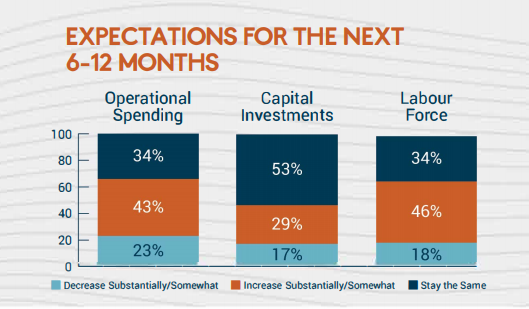
43% said they plan to increase operational spending over the next 6-12 months, 29% are looking to grow their capital investments, and 46% hope to expand their labour force.

Expectations for businesses in Lethbridge. (From the 2019 Business Report)

Respondents were asked to name the three biggest advantages to doing business in Lethbridge. 67% said it was the quality of life, 60% believed it was the stable economic conditions, and 37% like the collaborative environment.

“Having a reasonably diversified economy has helped the city and region when compared to other areas of the province,” says Economic Development Lethbridge’s CEO Trevor Lewington. “Not being dependent on one or two sectors helps keep our economy growing and people working, living and enjoying our city and the quality of life it provides.”

At the same time, many business owners reported struggling with labour-related issues, as all three of the “top 3 disadvantages” were in regards to the workforce.

37% said a lack of a qualified workforce was the biggest disadvantage, 32% said it was the cost of labour, and 29% reported the availability of the workforce being poor.