Stay informed with the LNN Daily Newsletter
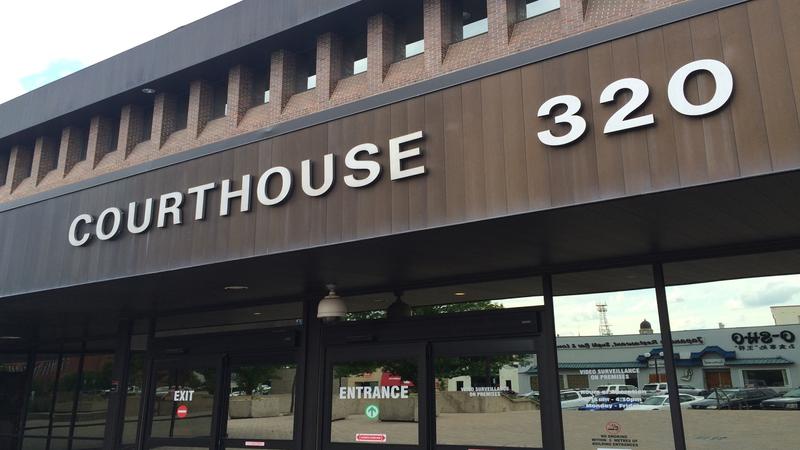
Lethbridge Courthouse. (Lethbridge News Now)

Man found guilty of lesser charge in fatal pedestrian hit and run near Lethbridge

Jul 28, 2020 | 5:35 PM

LETHBRIDGE, AB – A Southern Alberta man has been declared guilty in a 2018 collision, but not the charge he was originally facing.

On September 2, 2018, Michael White Quills of Cardston, then 31, struck a pedestrian on Highway 5 south of Lethbridge at approximately 4:45 am, which resulted in the death of 26-year-old Gage Christian Good Rider.

Justice Paul Pharo gave his decision in Lethbridge Court of Queens’ Bench Tuesday.

Originally, White Quills was charged with failing to remain at the scene of a collision involving bodily harm or death, which carries a maximum sentence of life. Pharo instead found him guilty of the lesser charge of failing to stop at the scene of an accident, which has a maximum sentence of five years.


Crown Prosecutor Erin Olsen likened the lesser charge to being a standard hit and run.

Background:

In the evening prior to the collision, White Quills competed in a rodeo near Cardston and later went to Lethbridge with two friends for a party.

He admitted to consuming eight-to-11 beers and had another eight-to-10 in his Dodge Ram truck.

After a night of partying, the group headed back to Cardston on Highway 5, travelling southbound between 90-111 km/hr in a 60 km/hr zone.

At the time of the collision, Good Rider and his friend D.J. Long Time Squirrel were walking southbound on the road from Lethbridge to the Blood Reserve as they could not get a ride back.

The truck, driven by White Quills, struck Good Rider. White Quills continued down the highway and did not slow down or stop.

White Quills turned himself into police two days later.

There are two reasons why the presiding judge downgraded the charge. One is that White Quills did not know that the collision involved a person who was killed or hurt. The other is that the crown failed to prove that White Quills was willfully blind to the situation.

Did he know?

At the time of the collision, White Quills said that he knew he hit something but was not sure what. His eyes were not on the road at that moment as he was adjusting the radio.

As well, due to the dark conditions, he did not see what was hit.

At first, White Quills thought he might have hit a parked motorcycle since he saw pieces of metal fly up into the air. Justice Pharo said the chance of a motorcycle being parked in the middle of the highway in the lane without a person nearby was not likely.

White Quills’ other guess is that he might have hit a deer. Years ago, he had a collision with a deer and said this felt similar to that. Deer are common in that area as are collisions with deer.

He said the reason he did not stop that, in the prior collision with the deer, it left his car unable to run. He wanted to get he and his friends home so he kept driving.

The judge ruled that White Quills genuinely did not know that he hit another human being.

Was he willfully blind?

Willful blindness means a person seeks to avoid criminal liability by intentionally keeping themselves unaware of facts that would make them liable.

While he did not actually see the accident take place nor any person on the road, Justice Pharo did not believe that he actively took steps to avoid seeing it.

He also agreed that it was unlikely that a person would be walking along a highway with no pedestrian lane at 4:45 am. The judge agreed that White Quills’ second guess, saying that hitting a deer was much more likely.

Justice Pharo ultimately ruled that White Quills was reckless in his actions, but not willfully blind.

Court will reconvene on September 4. It is possible that a sentence will be given then.