Stay informed with the LNN Daily Newsletter
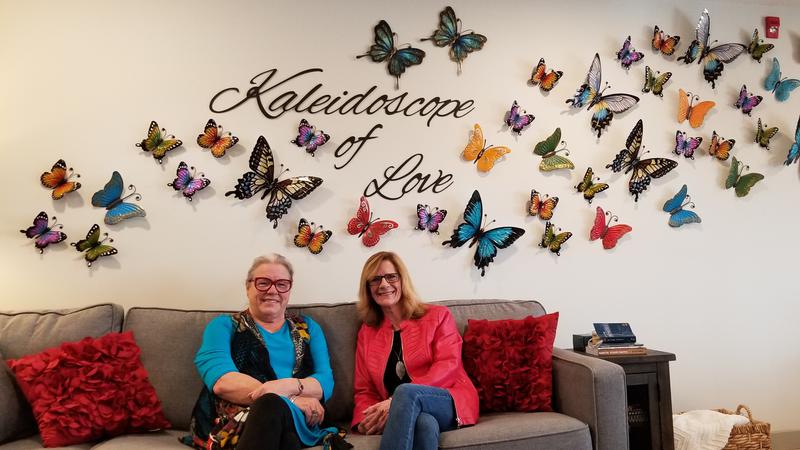
Julie Kissick (left) with Patty Auer in front of the 'Kaleidoscope of Love' artwork at the Segue Women's House (Lethbridge News Now)

Kaleidoscope of Love: Inside the Segue Women’s Home

Mar 25, 2021 | 9:03 AM

LETHBRIDGE, AB – The Segue Women’s Home in Lethbridge is now complete.

Julie Kissick with Streets Alive Mission says it’s a place where women facing addiction can come and recover, while being surrounded by a sense of love and community.

“The goal of this home is to take women who have made a decision that they want to get their lives back. They want to be abstinent; they may want to have kids back, they may want to get relationships with parents [and] healthy relationships back, but mostly they want to get their life back,” she explained.

“They’re tired of being on the street, they’re tired of living in shelters, they’re tired of feeling beat down by life and they’ve just made that decision that as hard as it’s going to be, it’s harder out there.”

There are three ‘phases’ to the Segue Women’s Home.

Kissick said phase one is for women who are coming in off the streets, or who may have been in a treatment centre. Women can be in phase one for 30 days, or however long it takes them to gain stability.

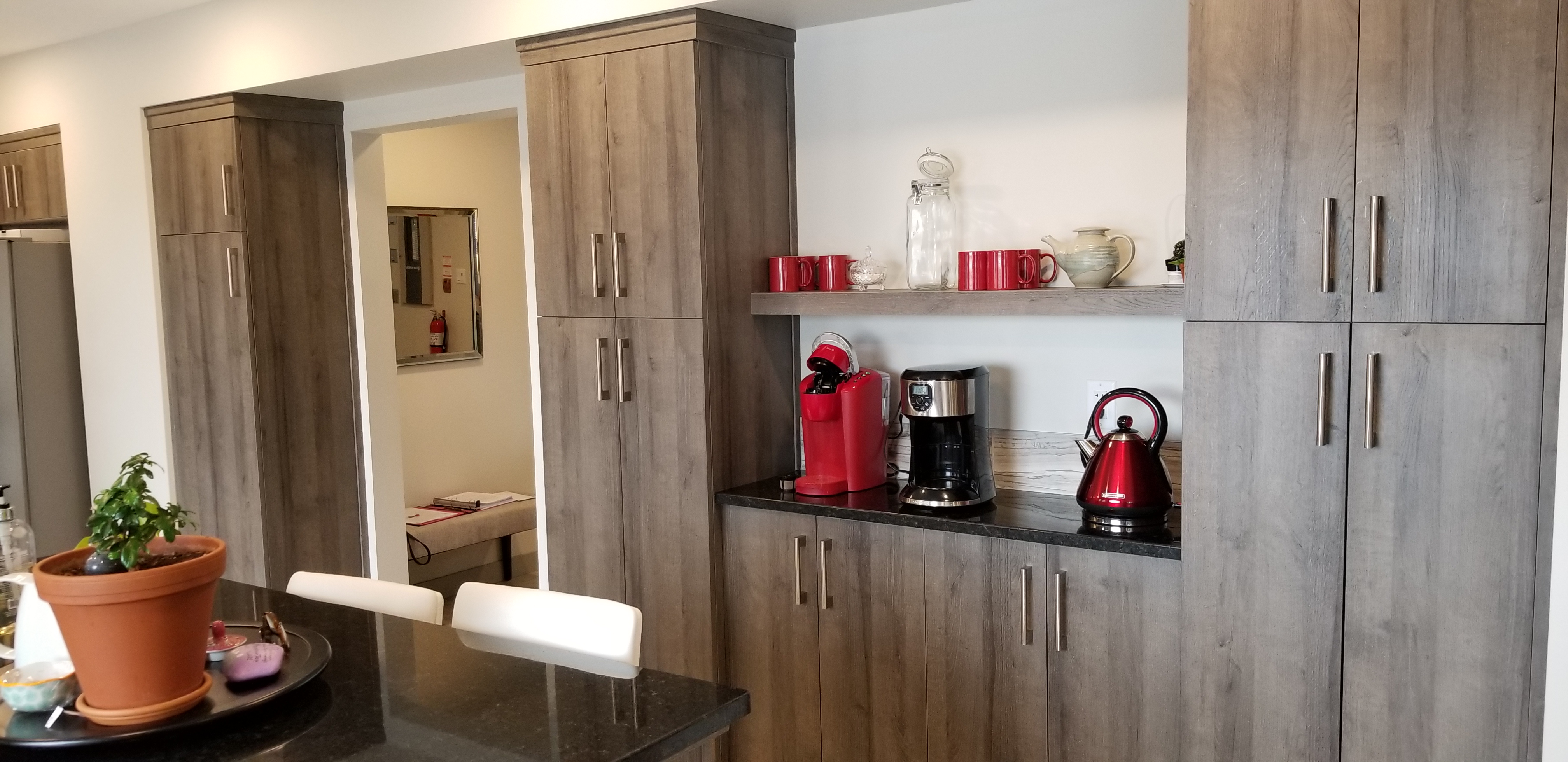
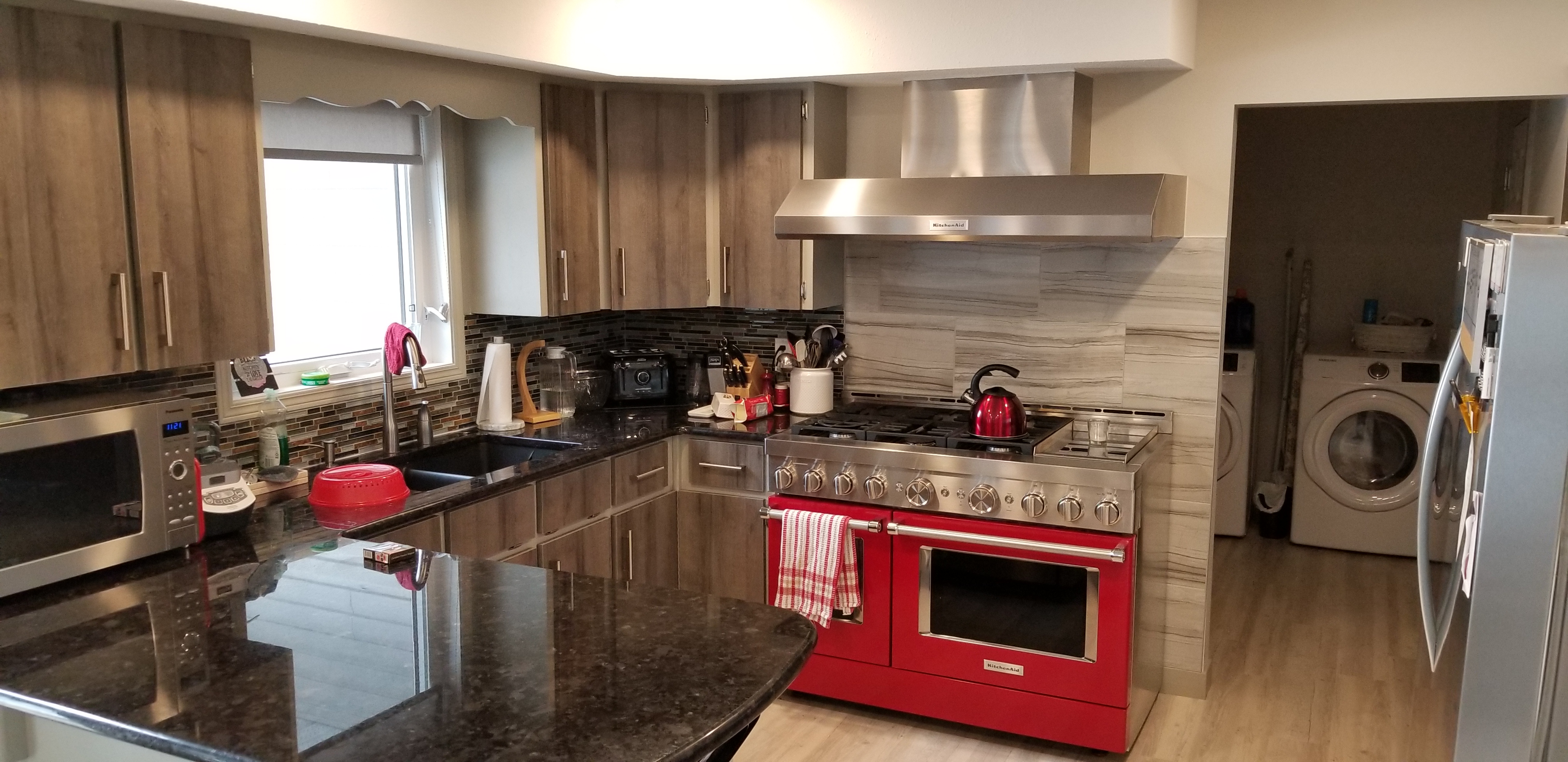
The kitchen in the ‘phase one’ section of the home (Lethbridge News Now)

They then move on to phase two, which is in another section of the house.

“We have to trust them with their phones, we’ve got to trust them that they’re not going to break the rules non-stop, so there’s just a little less supervision in phase two, but by then, you’re well entrenched in the program,” Kissick said.

A part of phases one and two is group meals and meetings with other members of the household.

Phase three is for women who are considered stable in the journey to recovery, and who are looking for work, schooling etc. Kissick explained that the phase three section of the home has its own kitchen, living room and each bedroom has its own en-suite bathroom.

Women in phase three housing tend to buy their own food and can make their own meals in the separated kitchen.

However, no matter what the phase, a sense of community and help is always present.

“The opposite of addiction is connection and so, we try to keep that connection going,” Kissick remarked.

“In this home, we explore faith, which gives them the strength to walk through all they have to walk through to recover.”

She noted that women in the home pay rent, at a room and board rate and those interested in recovering in the home must apply.

Coffee station in the home (Lethbridge News Now)

The large residence has room for 17 women and Kissick said there is a wait list, as they are “growing into the home” following its renovation and opening last year. The residence was renovated between April and November 2020 before opening December 3.

Funding was provided in part by the City of Lethbridge, as well as generous donors, including a $1-million donation from one family.

Kissick said it’s important to have a space that is bright and that feels new. She added that Streets Alive had previously operated a home on the north side for the last eight years.

She believes that within the next six months, the Segue Women’s Home will be fairly close to capacity.

“I remember one girl came in once, and she said, ‘I have my own comforter’ [and] ‘I have my own bed’,” she said.

“We have no idea the impact on somebody who is that broken to feel like they don’t deserve a home like you and I, and they walk into this home and we work with them so that they understand [that] they actually deserve this.”

BROKEN BUTTERFLIES

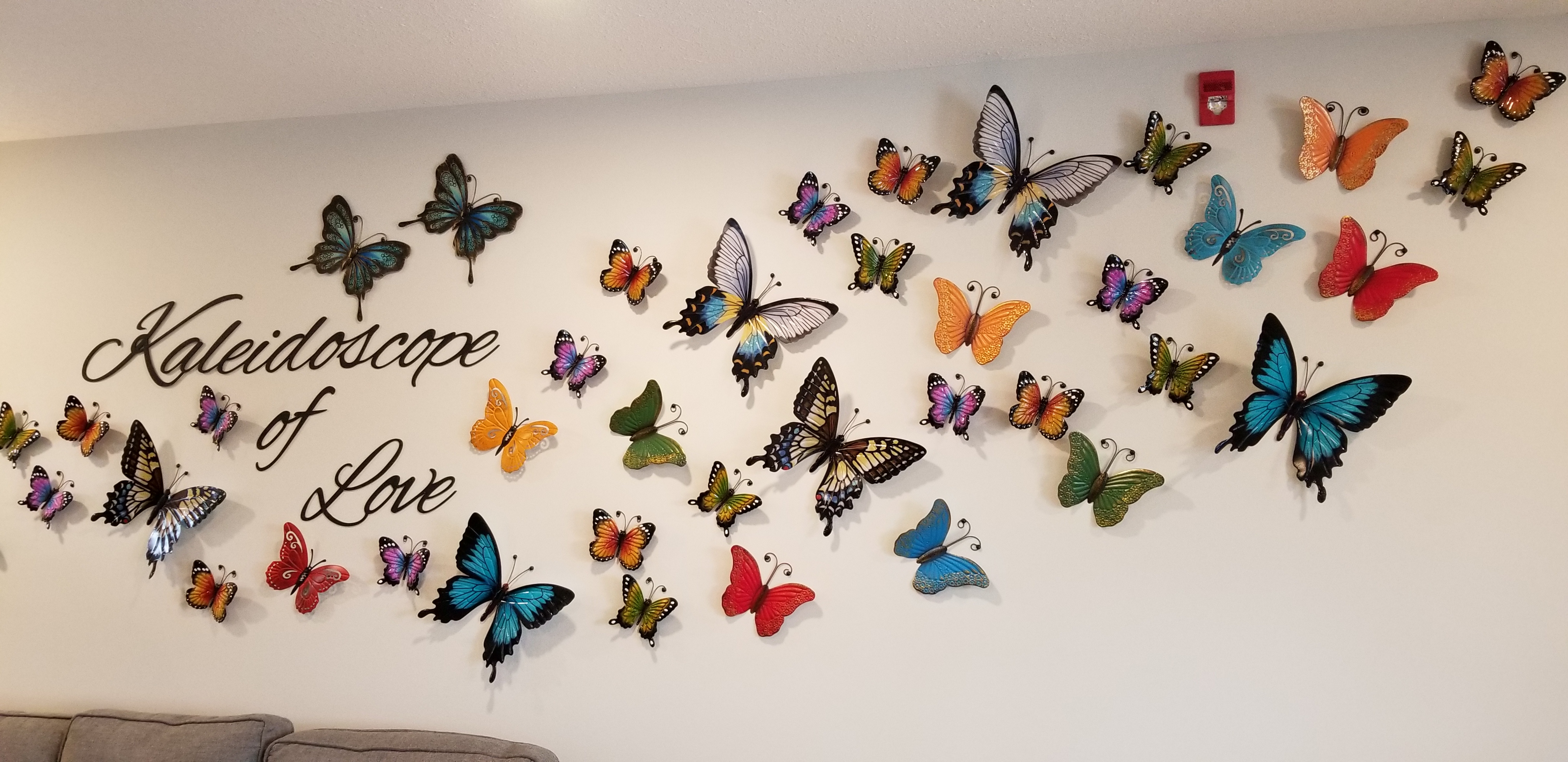
In the main living room of the home, there is an art piece showcasing butterflies. Kissick explained the meaning behind the artwork.

“From the very beginning when we started women’s work, we started a fundraiser called ‘broken butterflies’ because we recognize the beauty in these women, but the only thing for them is that they’re broken. They don’t understand their beauty and once they do, they’re off – the metaphor would be they’re off and flying with their wings.”

The ‘Kaleidoscope of Love’, seen in the living room of Segue Women’s Home (Lethbridge News Now)

Every butterfly on the wall represents a donor to the work that’s gone into bringing the home to life. Kissick said once COVID-19 restrictions permit, donors will be allowed into the home to add a name plate with their name on it to the wall.

PATTY AUER

Patty Auer is the manager of Genesis Connect for Women, a facility that houses Streets Alive’s A.S.K. Learning Centre, which offers programs focused on post addiction care, emotional wellbeing and spiritual growth.

Auer is also a recovering addict.

“I was the type of person that ran on my emotions and my emotions got me drunk or high,” she said.

Auer explained her living situation was not ideal, so she began her path to recovery with Streets Alive Mission. She applied for a job with the local organization, was hired and worked in reception for two years.

“In the process, I moved into the third stage living in the back of the house [the north side recovery home], oversaw the other women, along with myself,” she said.

“My experiences in life helped me with what I do today. I was given a chance. I was hired with no judgement.”

Auer said her first year of recovery was very difficult, but with support, hard work and perseverance, she has been able to forge a successful path for herself.

“I believe every woman out there deserves recovery. Every woman out there deserves to be loved,” she said.

“We love women until they can learn to love themselves. When they start to love themselves, we continue to love them and support them with decisions they make for a healthier lifestyle.”

Auer remarked that she sees herself in the women she now helps.

“I see devastation, I see fear, I see insecurities. I witness a lack of faith. I witness free will,” she said.

“Today, going down the road, when they’re on this journey, they’re given hope. They see hope, they see it in other women as to what this has done for women who have come through this home.”

She said women who successfully recover thanks to the home are able to obtain not jobs, but full careers.

“I can actually say, for the first time in over 30 years, that I look forward to waking up in the morning. I get to go to work, I get to have a home over my head – a different home because I don’t live here [Segue Women’s Home]. I get to have good people in my life. I am provided for the way God wants me [to be] provided for.”

EDUCATION AND ERASING THE STIGMA

Both Auer and Kissick spoke about the importance of education the public about recovery.

“One of last things that I need is to be judged on my behaviours and my actions when I was out there, because all of that was to cover up how I truly felt and somehow allowed me to believe that I belonged, and that’s not where I belonged,” Auer said.

Kissick added that part of the problem, particularly for women, is that they are traditionally nurturers.

“As nurturers, you are judged by society if they think you’ve abandoned your children and you’ve abandoned your role as a nurturer and so, I think that the judgement is harsher for women than it is for men,” she explained.

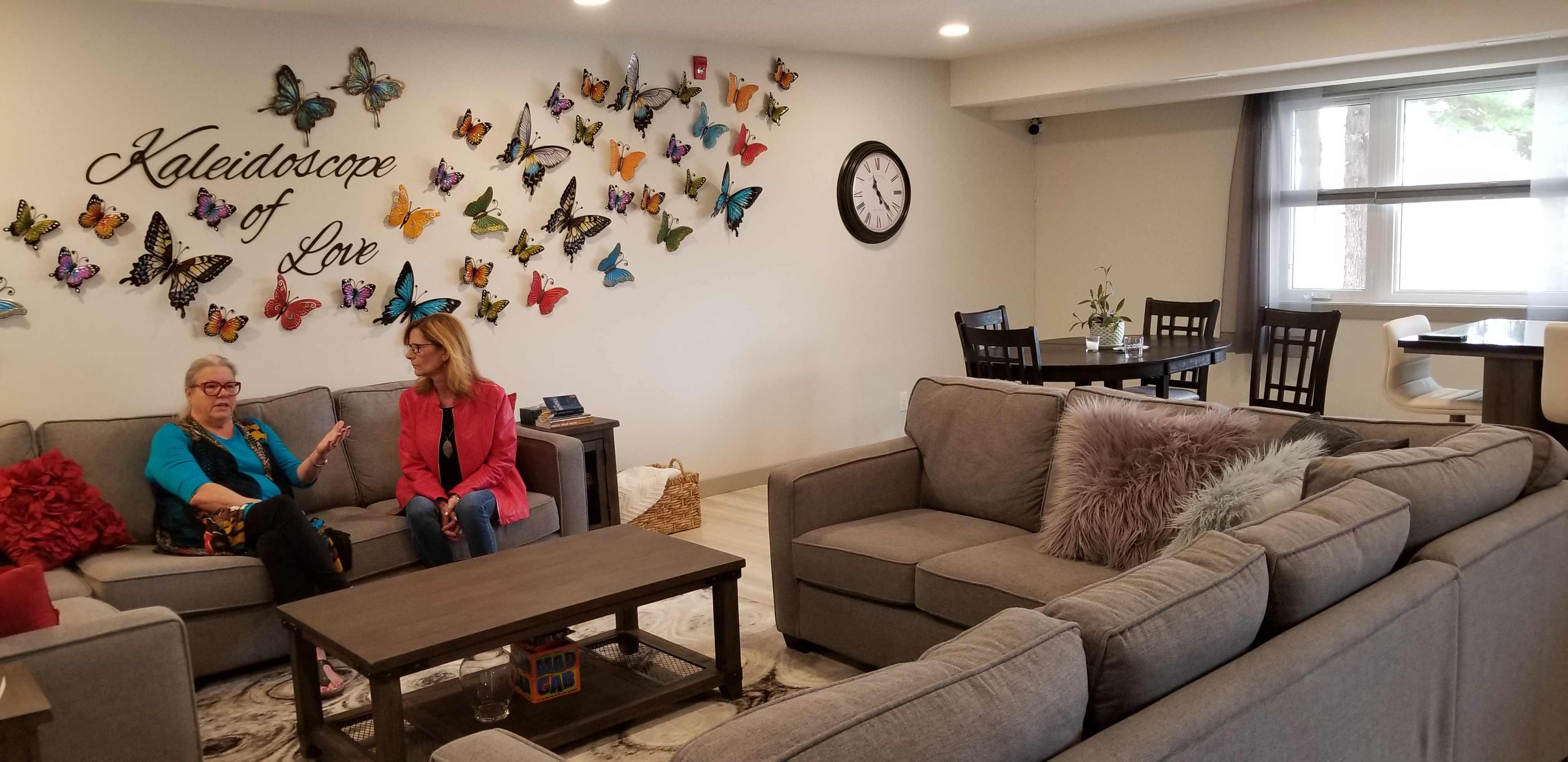
Kissick (left) and Auer in the living room of the ‘phase one’ section of the home (Lethbridge News Now)

Kissick recognizes that some people may be wary of recovery houses like Segue Women’s Home, but the team at Streets Alive is dedicated to having people in recovery be accepted as part of the community and as part of a neighborhood.

She added that there’s a lack of recognition and understanding of the trauma that has led to an addiction.

“Society looks at addiction and they judge the addiction but what they don’t understand is behind the addiction is trauma and that trauma needs to be healed and there’s a process of healing. They need a safe place as they go through that process of being healed from the trauma of their lives,” Kissick said.

“We should be compassionate and empathetic towards these men and women who are working so hard to get beyond the trauma and their lives, so that they can feel some sense of normal inside a society. We need to support that [and] not stand against that.”