U of L student leads international study into extinct bird
-
Share on Facebook
-
Share on Bluesky
-
Share on X
- Copy Link
A graduate student at the University of Lethbridge played a key role in studying the unique ways lifeforms evolve.
Sara Citron led an international team from Canada, the U.S., and Australia to look into how an extinct Hawaiian ibis evolved unusually small eyes and a dramatically reduced visual system.
She explains that they made the discovery while examining the skull of an Apteribis, a flightless bird that once inhabited the Pacific islands.
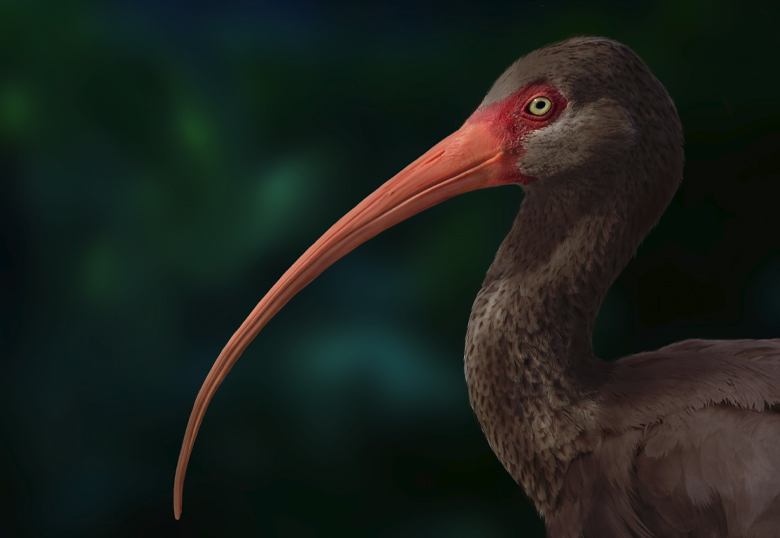
“Anyone who has spent time birdwatching or visiting a zoo is familiar with ibises. These are very distinct birds: they have exceptionally long, elegant beaks and many of them have striking colors that set them apart from other shorebirds,” says Citron. “Their elongated beaks are key to how they feed. By inserting the beak into mud, shallow water, or soft ground, they probe for subtle vibrations that reveal the presence of hidden prey, such as small invertebrates.”