Stay informed with the LNN Daily Newsletter
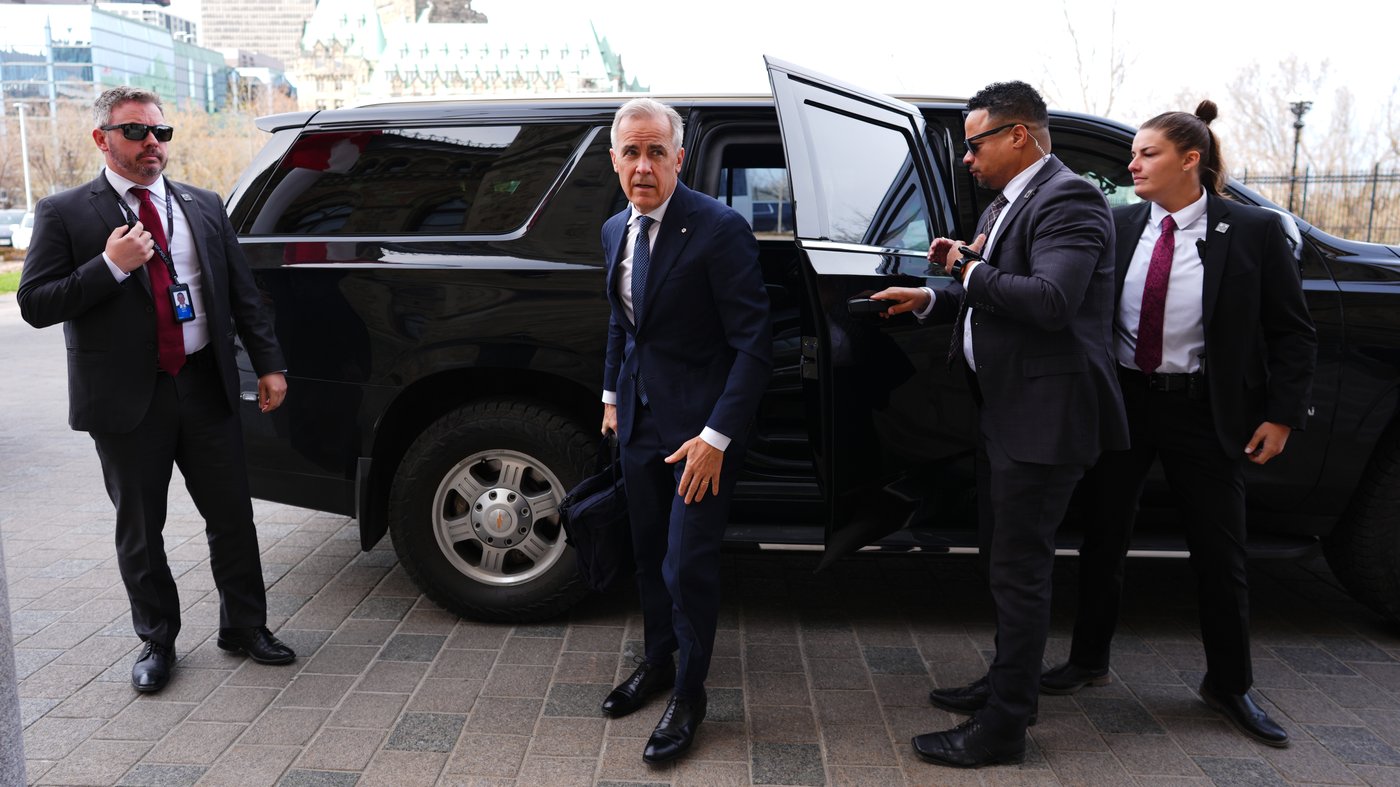
Prime Minister Mark Carney arrives on Parliament Hill in Ottawa on Tuesday, April 28, 2026. THE CANADIAN PRESS/Sean Kilpatrick

Liberals table first fiscal document in seven years that won’t need opposition votes

Apr 28, 2026 | 2:04 PM

OTTAWA — The Liberal government released a spring economic update Tuesday closely focused on boosting investment and job training.

While the document contains measures that likely would face pushback from the opposition, the Liberals — thanks to their new parliamentary majority — won’t have to worry about securing opposition votes to pass it.

The thin document served mostly to provide a mid-year update on the government’s finances. Finance Minister François-Philippe Champagne boasted about ending the 2025-26 fiscal year with a deficit of $67 billion, compared with the $78 billion predicted by the federal budget last fall.

“I think what matters to Canadians today is that we have managed to lower the deficit, $11 billion, at a time where you would see in the world this kind of a fog of uncertainty which is clouding a lot of parts of the world,” he said. “And Canada, despite all that, has been able to, managed to, lower the deficit, and at the same time making sure we’re there for Canadians.”


While the document warns of significant risks to the Canadian economy stemming from the war in Iran and U.S. tariffs, Champagne said the government is laser focused on economic growth and Canada remains in a strong fiscal position.

“Growth does not happen by accident,” he said. “Growth happens because you have strong policy.

“If you look at the price of oil, obviously there’s a lot going on in the world today, to say the least. There is a lot of uncertainty with respect to many things you’re seeing. But I think the fundamentals of Canada are strong.”

Champagne said the update had “two flagship measures” — the Canada Strong Fund announced by the government on Monday, and the Team Canada Strong Plan to recruit, train and employ up to 100,000 new skilled trade workers by 2031.

The fund is a sovereign wealth fund with $25 billion over three years in federal seed money meant to kick-start investment in major infrastructure projects. The Team Canada Strong Plan provides $6 billion over five years to build up the skilled trades workforce needed to meet the government’s infrastructure targets, and to address youth unemployment.

The update offered few details on the sovereign wealth fund. It didn’t explain how Canadians will be able to invest in it or where the government plans to find the $25 billion.

The skilled trades plan includes $2 billion to recruit more young people into the trades, including through paid, entry-level work experiences, and wage subsidies for employers who hire and train apprentices.

Another $331 million will modernize apprenticeship training to reduce certification delays, introduce online exams, and expand union-run training centres.

And $3.4 billion will provide a training grant of up to $400 per week to apprentices during their training, and provide one-time $5,000 bonuses to apprentices who make it all the way to certification in a Red Seal trade.

The jobless rate for people aged 15 to 24 was close to 14 per cent in March, more than double the general unemployment rate.

The government also included some new funds for tackling financial crimes, including extortion, that have become a serious problem in some communities in British Columbia, Alberta and Ontario.

It will also ban cryptocurrency ATMs as part of broader anti-money laundering efforts. These ATMs can be found in a variety of businesses, including convenience stores and some restaurants.

Champagne said the update kept the focus on affordability but did not introduce new programs. Instead, the update mentioned recently announced programs like the pause on the federal fuel surcharge and the grocery and essentials tax rebate.

New Democratic Party Leader Avi Lewis called that a missed opportunity.

“The Liberal government had a big opportunity today to actually address the everyday emergency of the crisis of the cost of living for Canadians with concrete measures, new programs that would actually make people’s everyday lives better, it didn’t do that,” he said.

Lewis added that the update didn’t include increased investments in health care.

“This government does not have the priorities of working-class Canadians at heart,” he said.

In the House of Commons, Conservative Leader Pierre Poilievre accused Prime Minister Mark Carney of outspending former prime minister Justin Trudeau. He said this update outlines a plan that will benefit people with connections to the government but leaves regular people behind.

Poilievre said this update is a form of “credit card budgeting” that shifts the bill to future generations.

“An increasing share of spending goes to Liberal elites and corporate insiders, so not everyone is hurting,” he said. “The prime minister’s so-called sovereign wealth fund, which has no wealth to put in it, is relying 100 per cent on the national credit card.”

Bloc Québécois Leader Yves-François Blanchet said the update was “something of a show.” He added the issue of U.S. tariffs was “not addressed at all” in the document.

“Last year’s deficit was reduced basically because some spendings were not made, in some cases about environmental issues, because inflation increased the government’s income and the economy was very resilient,” he said.

Green Party Leader Elizabeth May told reporters that she was disappointed by the update.

“We are astonished in many ways that this document is as sanguine as it is about the geopolitical turmoil, the price of oil,” she said.

For the first time in seven years, the Liberals don’t need to worry about whether any opposition MPs will back a budgeting document or bill. Thanks to a series of floor-crossings and three byelection wins securing a Liberal majority, Carney’s government now has all the votes it needs to pass the documents among its own caucus.

This report by The Canadian Press was first published on April 28, 2026.

David Baxter and Catherine Morrison, The Canadian Press