Stay informed with the LNN Daily Newsletter
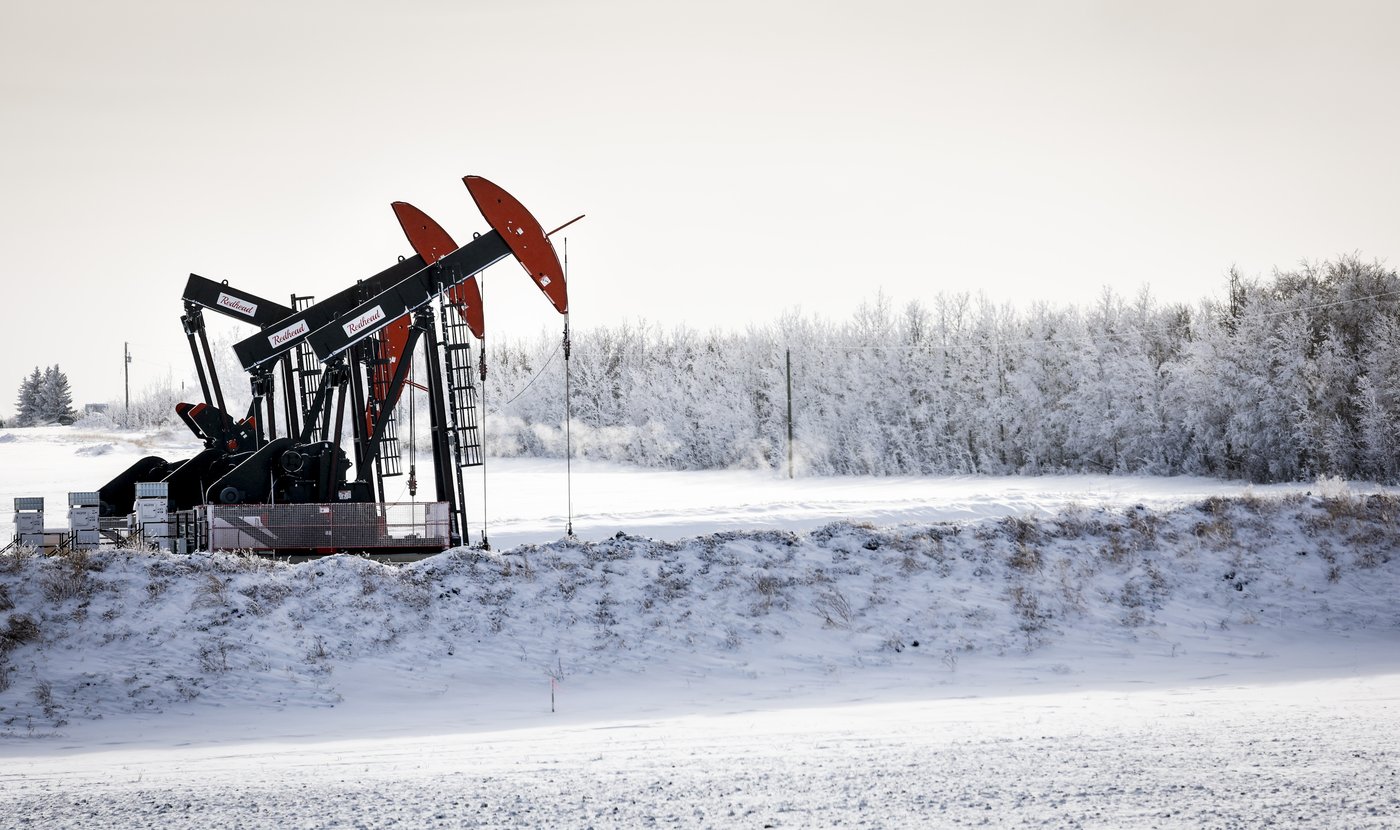
Pumpjacks draw out oil and gas on a frosty -25C day near Carstairs, Alta., on Monday, Feb. 3, 2025. THE CANADIAN PRESS/Jeff McIntosh

Oil and gas emissions dropped in 2025 despite increased production: report

Oct 8, 2026 | 2:00 AM

OTTAWA — Canada’s oil and gas sector accounted for a lower level of emissions in 2025, despite boosts in production, while the country’s overall emissions ticked up thanks to increased reliance on natural gas to heat homes.

Those are among the findings in the Canadian Climate Institute’s annual national emissions report, released Thursday.

The institute, which receives three-quarters of its funding from the federal government, is releasing early estimates of Canada’s year greenhouse gas emissions. Ottawa’s estimates for 2025 are expected in April.

The institute found Canada’s total emissions increased in 2025 by about one per cent in 2025 to 691 million tonnes of carbon dioxide, which is equivalent to the emissions produced by 161 million gas-powered passenger vehicles driven for one year.


“It’s not a huge increase but it means that Canada is even further from its emission goals,” said Ross Linden-Fraser, the acting director of 440 Megatonnes, a division in the climate institute tasked with analyzing Canada’s emissions output.

“There’s a widening gap to the targets that Canada has set for itself. We might be as much as 20 years behind on achieving our 2030 target.”

Canada’s current target under the Paris climate change accord is to cut emissions to 40 to 45 per cent below 2005 levels by 2030, and hit net-zero — where all emissions are captured by nature or technology — by 2050.

The government’s own figures show Canada has achieved an emissions reduction of only 10.3 per cent below 2005 levels, with total emissions down 78 million tonnes in 21 years — making it the worst-performing country in the G7.

The Canadian Climate Institute’s latest report says Canada’s emissions are only 9.5 per cent below 2005 levels.

The report found emissions from the oil and gas sector dropped by 0.2 per cent last year from 2024 levels — that despite Statistics Canada reporting in June that Canada had produced record amounts of crude oil in 2025, about four per cent more than in 2024.

While emissions from the oilsands were 844,000 tonnes higher in 2025 than the year before, a reduction of 1.3 million tonnes in emissions from conventional oil and gas extraction and downstream activities more than offset the increases from upstream producers.

“Much of that progress is related to fugitive methane emission reductions,” said Seton Stiebert, a senior fellow at the climate institute. He said the sector’s higher rate of efficiency per unit produced is also driving down emissions, meaning the oil and gas sector is finding ways to use less energy to extract, store and ship oil.

The report says buildings, including homes and commercial structures, were the main drivers of Canada’s emissions increase in 2025. Linden-Fraser said a colder winter in 2025 is to blame.

“The fact that our buildings are so sensitive to temperature is a reflection of how much the sector still uses fossil fuels,” he said.

“If the sector was electrified, it would be less sensitive to that weather effect.”

The other big driver behind increased emissions was electricity generation, which has tended to be the main source of emission reductions over the last 20 years.

“That’s chiefly down to higher natural gas use. Where we have added new energy demand in the past 20 years, most of that demand is going to natural gas,” Linden-Fraser said.

“We’ve significantly reduced our use of coal, we’re using fewer other refined petroleum products, and natural gas is less emissions-intensive than those than those fossil fuels. But it’s still a fossil fuel. And higher natural gas use puts a floor on what emissions reductions we can accomplish.”

The federal government earlier this year unveiled a national electricity strategy which largely relies on natural gas to help double the size of Canada’s grid by 2050.

The government said at the time some jurisdictions prefer natural gas generation because it’s affordable and quick, and allows output to be ramped up or down depending on demand.

The emissions increases in 2025 were almost exclusively a result of federal policies under Trudeau, and Linden-Fraser said new policies under Prime Minister Mark Carney’s government risk moving Canada in the wrong direction.

In a video released in June, Carney said the Trudeau-era policies were “too expensive and divisive” and acknowledged the country’s emissions would be higher “in the next few years” than projected.

Linden-Fraser pointed to weakened industrial carbon pricing and the delayed implementation of stronger methane regulations as two areas where Ottawa risks seeing emissions rise.

“A third change is it looks like the government may not apply or may even eliminate the clean electricity regulations,” Linden-Fraser said. “The electricity sector has made a lot of progress in the past couple of decades, but that progress is slowing down and maybe even reversing.

“The clean electricity regulations were intended to send a long-term, consistent signal to keep us decarbonizing the grid, to deepen the cleanliness of our grid. The removal of the clean electricity regulations might unwind that progress.”

This report by The Canadian Press was first published Oct. 8, 2026.

Nick Murray, The Canadian Press