Stay informed with the LNN Daily Newsletter
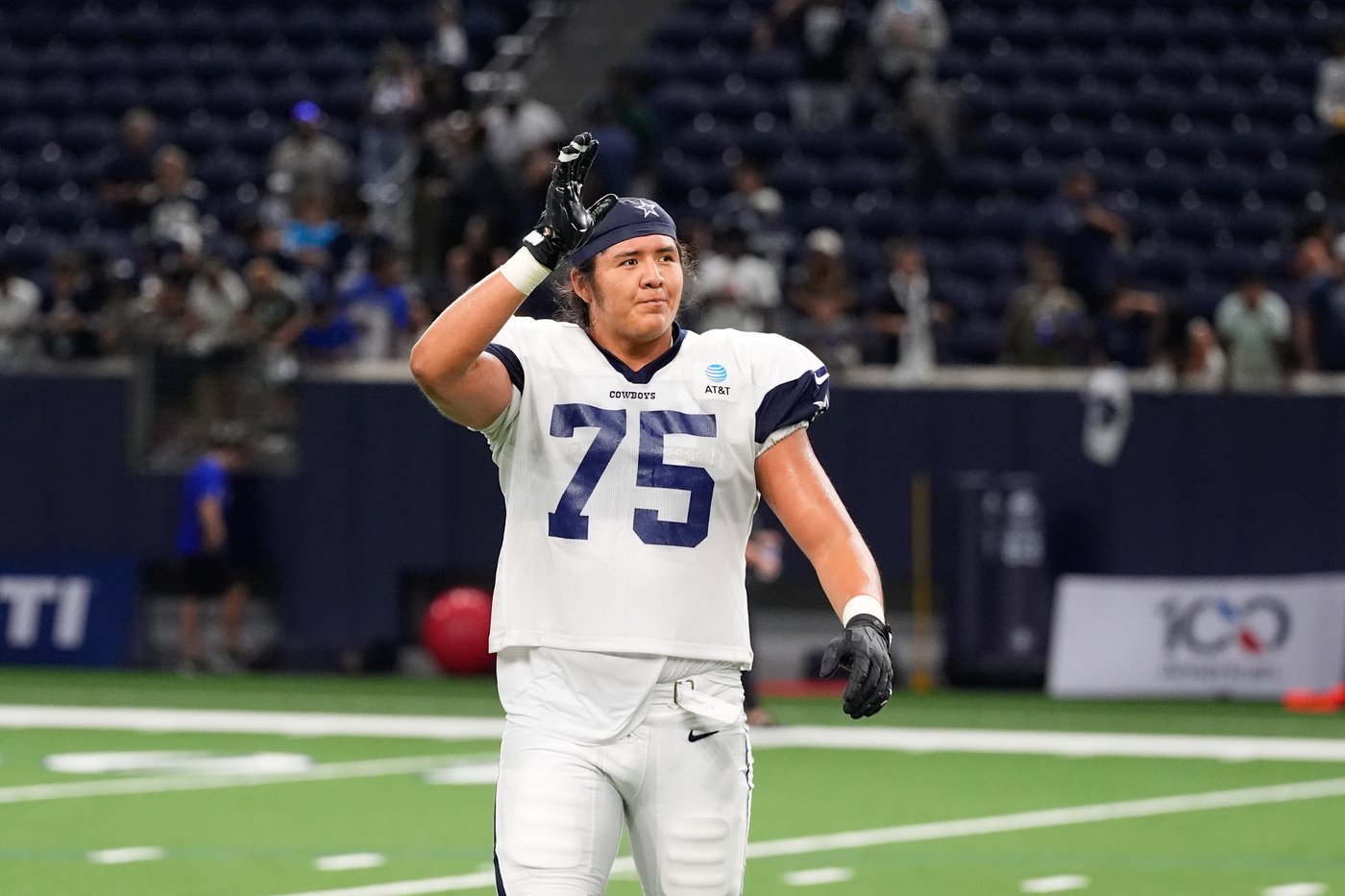
FILE - Dallas Cowboys offensive tackle Shiyazh Pete waves to fans after an NFL football practice on Aug. 26, 2026, in Frisco, Texas. (AP Photo/Tony Gutierrez, File)

Native athlete pride: Shiyazh Pete recognized on Indigenous Peoples Day

Oct 11, 2026 | 10:28 PM

ALBUQUERQUE, N.M. (AP) — Shiyazh Pete’s time with the Dallas Cowboys was brief, but his NFL debut gave fellow Navajo citizens a moment to remember. When the rookie offensive lineman took the field for a preseason game against the Arizona Cardinals in August, thousands of fans who had traveled from across the Navajo Nation erupted in cheers, waving tribal flags and exclaiming “yéego,” an affirmation that translates roughly to “with great effort, do it.”

Pete played just six snaps, but returned to the sideline to a standing ovation — a powerful show of support for the first member of the Navajo Nation to sign with an NFL team.

Now a free agent after being waived by the Cowboys, Pete has returned home to the Navajo Nation, where he has been thanking fans for their support as he looks for his next NFL opportunity. He surprised students at his alma mater, Shiprock High School, with an appearance at their homecoming pep rally and served as grand marshal of the Northern Navajo Nation Fair Parade.

On Monday, Pete will meet and greet fans at an Indigenous Peoples Day event in Albuquerque, New Mexico.

Pete joins a long list of Native athletes who have broken barriers in sports, inspired pride in their communities and become role models for Native children. From Olympic champions to professional basketball players, these athletes have helped shape sports history while opening doors for those who follow.

Native athletes stood on Olympic podium

Still widely considered the greatest athlete of all time, Jim Thorpe, of the Sac and Fox Nation in Oklahoma, won the decathlon and pentathlon in the 1912 Olympics. He also played six seasons in Major League Baseball and 12 in professional football, including in the American Professional Football Association, the precursor to the National Football League.

A track and field teammate of Thorpe’s at the Carlisle Indian Industrial School in Pennsylvania, Louis Tewanima carried on the Hopi spiritual practice of running to gain recognition at the repressive institution. He finished ninth in the marathon at the 1908 Olympics in London and second in the 10,000 meters at the 1912 Olympics in Stockholm, setting an American record in the event.

Modern surfing traces its history to Native Hawaiian Duke Kahanamoku. His international demonstrations between winning gold and silver swimming medals at the 1912, 1920 and 1924 Olympics made surfing widely known. Kahanamoku helped establish surfboards as standard ocean lifeguarding equipment. He acted in movies and served from 1935 to 1961 as sheriff of Honolulu.

Native runners set the pace through the 20th century

Marathoner Ellison Myers “Tarzan” Brown, of the Narragansett Tribe in Rhode Island, won the Boston Marathon in 1936 and 1939 and competed for the U.S. in the 1936 Olympics in Berlin. Brown was to run the marathon in the 1940 Olympics, but the games were canceled due to World War II.

Oglala Lakota runner Billy Mills was the first non-European to win Olympic gold in the 10-kilometer run with his upset, Olympic-record race at the 1964 Olympics in Tokyo. The run was the best U.S. medal finish in that Olympic event since Tewanima’s silver more than half a century earlier — and Mills’ 10K gold has yet to be equaled by a U.S. Olympian.

The first American woman to finish a marathon under 2 hours, 30 minutes, Patti Catalano Dillon, is of Mi’kmaw descent and grew up in Massachusetts. Dillon was runner-up in the 1980 New York Marathon and in the 1979, 1980 and 1981 Boston marathons. Dillon held world records in the half marathon and 30-kilometer and 20-kilometer runs.

Indigenous players gained recognition in pro sports, too

Ryneldi Becenti was the first Native American WNBA athlete, playing for the Phoenix Mercury in the 1997 season. Becenti grew up playing fast-paced “rez ball” on the Navajo Nation and was a top player for Scottsdale Community College and Arizona State University before going pro as a player in Europe.

Los Angeles Sparks player Aaliyah Nye is a citizen of the Match-E-Be-Nash-She-Wish Band of Pottawatomi in Michigan. A top scorer in high school, then for Alabama, Nye joined the WNBA in 2025 as a Las Vegas Aces draft pick. In 2026, she was drafted and waived by the Toronto Tempo and Atlanta Dream before being claimed by the Sparks.

Golfer Notah Begay III notched four PGA Tour wins in 1999 and 2000. A Native American with Navajo, San Felipe and Isleta heritage, Begay established a foundation to promote Native American health and wellness through soccer and golf programs. He is a TV golf analyst. ___ Gruver reported from Fort Collins, Colorado.

___

This story is published through the Global Indigenous Reporting Network at The Associated Press.

Mead Gruver And Savannah Peters, The Associated Press