Stay informed with the LNN Daily Newsletter
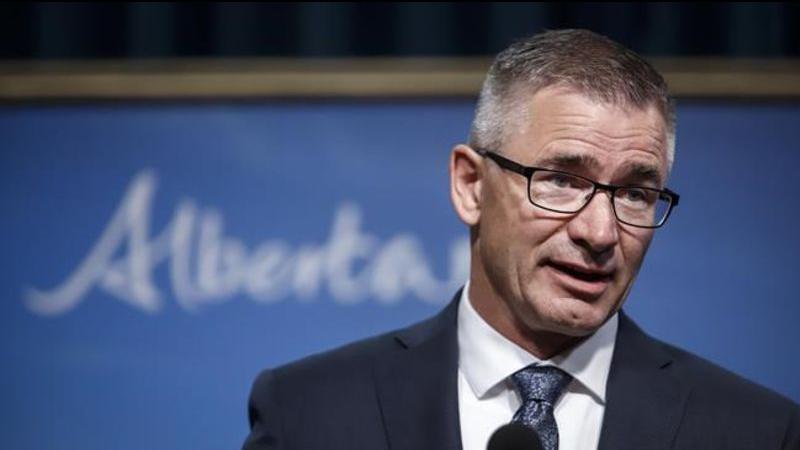
File image of Finance Minister and President of the Treasury Board Travis Toews (Government of Alberta)

Alberta ended 2020-21 fiscal year with $16.9 billion deficit, lower than forecast

Jun 30, 2021 | 11:04 AM

EDMONTON, AB – The provincial government says its fiscal performance improved late last budget year.

Alberta ended the 2020-2021 budgetary year with a deficit of $16.9 billion, which is $3.2 billion lower than the third-quarter forecast. The province says oil prices and other economic indicators trended upwards as the year ended. This in turn helped boost government revenue.

President of the Treasury Board and Minister of Finance Travis Toews said, “last year was very difficult for many Albertans, but the province is emerging stronger than expected.”

“The government took bold action to support job creation, build infrastructure and diversify our economy, and we are determined to carry this momentum forward, while remaining committed to our fiscal anchors.”


Revenue for 2020-2021 was $43.1 billion, which is $0.8 billion higher than the third-quarter forecast that was reported in Budget 2021. The province reported that increase was mainly due to stronger-than-expected oil prices in the last quarter of the fiscal year. Revenue from oil sands royalties and corporate and personal income taxes also increased from the third quarter forecast.

Financial markets gained momentum in the latter months of the year. This helped boost investment income. Revenue from premiums, fees and licenses also improved, for example, strong North American lumber prices bolstered the province’s income from timber royalties.

Total expense in 2020-2021 was $60.1 billion, $2.4 billion lower than the third-quarter forecast. The Alberta Government noted that there is a decrease in non-COVID related operating expenses of $1.2 billion from Budget 2020, “which demonstrates the government’s commitment to the responsible use of taxpayer dollars.”

On that note, expense was $2.8 billon higher than what was originally budgeted for due to the pandemic. In 2020-2021, support for the COVID-19 response and Alberta’s Recovery Plan totalled $5.1 billion, plus $460 million in capital investments. The government also deferred billions of dollars in fees and taxes to help Albertans impacted by the pandemic.

Some of the key actions taken in 2020-2021 in response to the pandemic included:

  • Additional investments in the health care system totally $1.5 billion
  • The acceleration of the Job Creation Tax Cut “to make Alberta one of the most competitive jurisdictions in North America”
  • More than $2.5 billion in deferrals on utility bills, education property taxes, student loans, and government fees and taxes
  • Direct grants of roughly $626 million to small businesses impacted by health restrictions
  • Supports for Albertans to safely isolate
  • 40-million face masks to Albertans
  • Provided tax relief for the hospitality sector by delaying tourism levy payments
  • Support for homeless shelters, women’s shelters and food banks

A release stated that, “spending continues to be anchored by sound fiscal principles that ensure the government is fiscally responsible with Albertans’ tax dollars.”

“This past November, Alberta’s government committed to keep the ratio of net debt to gross domestic product (GDP) below 30 per cent. This ration compares what Alberta owes with the size and strength of its economy.”

As for debt, the province says its overall level of debt remains low compared to most other provinces.

“Alberta is also aligning its overall spending levels with other comparable provinces to ensure taxpayers are getting value for every dollar spent. Lastly, the government is committed to setting a timeframe for balancing the budget and repaying debt. This will be done once the pandemic is over and government has a clearer idea of the long-term global impacts.”

In 2020, while Alberta’s real gross domestic product (GDP) contracted by an estimated 8.2 per cent, many economic forecasters have predicted that the province will lead all others in Canada in growth this year. As of May, Alberta has already recovered about 86 per cent of the jobs lost between February 2020 and April 2020.

ALBERTA’S CAPITAL PLAN

  • In 2020-2021, Capital Plan spending totaled $6.9 billion, including $1.1 billion spent in response to the pandemic and in support of the province’s Recovery Plan;
  • Few new health facilities are under construction. Twelve health facilities are currently being renovated, modernized or expanded;
  • Alberta rehabilitated 830 kilometres of road and completed 111 new roads and bridges;
  • The province completed 20 school projects, and 68 others are underway;
  • Alberta completed 705 new housing units, and 1,842 more are under construction;
  • The province renovated two courthouses, and five courthouse projects are currently underway;
  • Alberta’s government, along with the Canada Infrastructure Bank and eight irrigation districts, partnered on a historic $815-million investment in irrigation infrastructure to support economic recovery in the province. The investment is expected to lead to the expansion of more than 200,000 irrigated acres over the next several years.

In 2020, Alberta reported $455 million in venture capital investment across 51 deals, a 100 per cent increase over investment in 2019, further diversifying the economy. Annual reports from the province are available online here.